
Back on the Move and Bound for Bingley
Date:
From:
Apperley Bridge
To:
Bingley
Waterway:
Leeds & Liverpool Canal
Travel Time:
5 Hours
Distance:
6.8 Miles
Content:
Ready and Rearing To Go
After two weeks of being stuck at the bottom of Dobson Staircase Locks because of the ongoing water shortages, it felt wonderful to finally be moving again.
The locks reopened on Saturday and, yesterday evening, we made our escape through Dobson Staircase Locks and one swing bridge before finding a spot to spend the night just beyond Apperley Bridge. It wasn’t exactly a marathon journey, but after being stationary for two weeks, simply moving the boat felt like progress.
This morning, however, we had somewhere to be.
The Bingley 3 Rise and 5 Rise Locks are still operating under restrictions, and we have been given a passage time of 10:00 tomorrow morning. So, at 8:30 this morning, we untied the ropes and set off on a five hour cruise towards Bingley.
By 13:30, Round Tuit was safely moored at the bottom of the famous Bingley locks, ready and rearing to go tomorrow.
But, as usual, getting there was far more interesting than simply cruising from A to B.

A Rather Unexpected Lift
Our first obstacle of the day was a swing bridge. John took the boat through while I stayed behind to close it, and it was while I was doing this that a volunteer lock keeper appeared.
He had driven his car out of the CRT pound opposite and stopped to ask whether we were planning to go through the next lock flight.
When I said that we were, he looked rather surprised.
He was under the impression that the locks hadn’t reopened yet.
I explained that we had been given to understand that they were open, and rather than leaving us to take our chances, he very kindly offered to drive me up to the locks so that we could check.
Meanwhile, John had carried on ahead with the boat.
His face was an absolute picture when I waved to him from the passenger seat of the lock keeper’s car as we drove past.
Now, I am always singing the praises of the wonderful lock keepers we meet on our travels, but being given a lift from the bridge to the locks really was going above and beyond. Thank you!

Good News at Field Locks
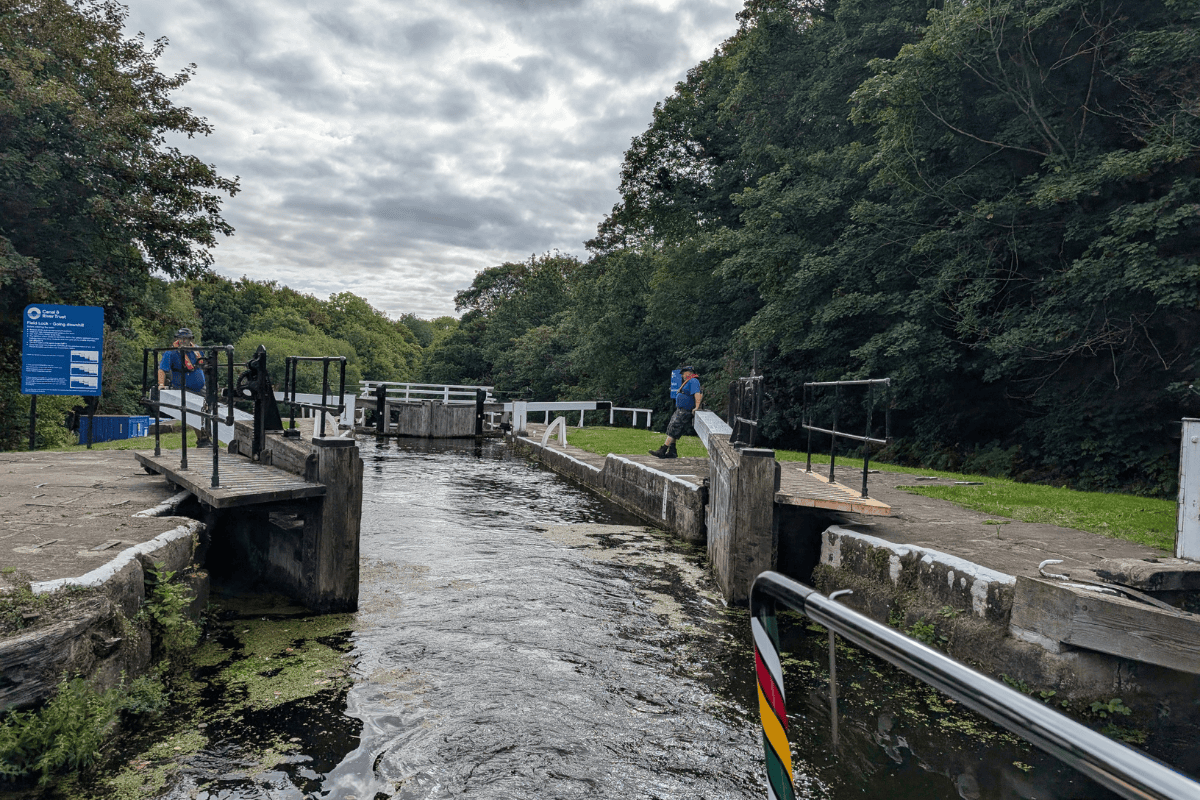
When we arrived at Field Locks, a staircase of three locks, there was another volunteer lock keeper helping two boats travelling down.
The good news was that we had been right – the locks were open, and we could continue our journey.
We all agreed, however, that the CRT notifications had been a little confusing.
Suddenly, I found myself with not one but two volunteer lock keepers to help me through the staircase. They were absolutely brilliant and did most of the hard work, while also carefully managing the water levels.
Apparently, boats can sometimes struggle to get across the cill between the chambers, so the water has to be handled carefully.
Once we were safely through, I jumped back onto the boat while the volunteers finished everything off, closing the paddles and gates behind us.
John, of course, immediately joked that I was being lazy.
After all, I had been given a lift and had barely had to work the locks!
I did point out that I would make up for it later in the day…
Swing Bridges and Stopping the Traffic
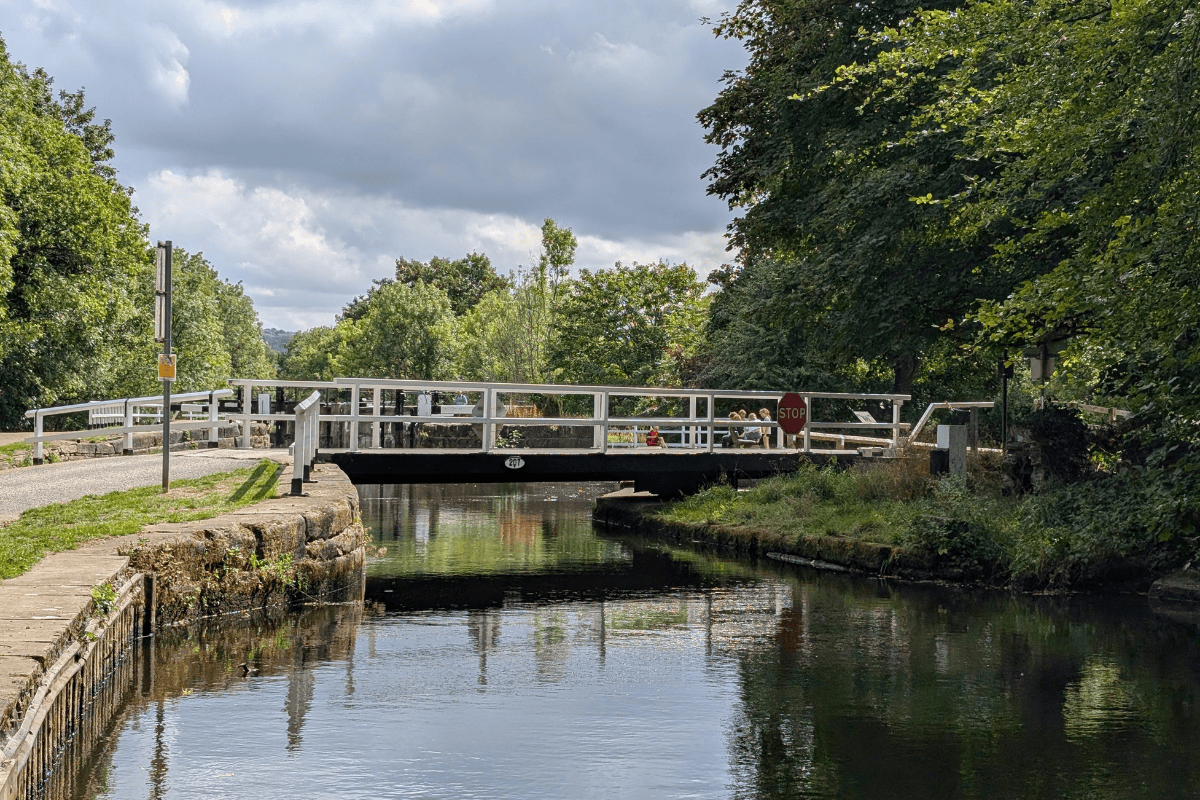
The next obstacle was another manual swing bridge, followed by Dock Lane’s electric swing bridge.
This one involved stopping the traffic.
I have to admit that, although nobody has ever complained when I have held them up while opening and closing a bridge, it can still feel a little intimidating when there are cars and pedestrians waiting for you.
You can’t exactly rush either.
There is something about standing beside a road, operating a swing bridge, while a small queue of people waits patiently for you to finish that makes you suddenly very aware that everyone is watching.
Fortunately, everyone was perfectly patient – as they always seem to be.
Cruising Through Industrial History
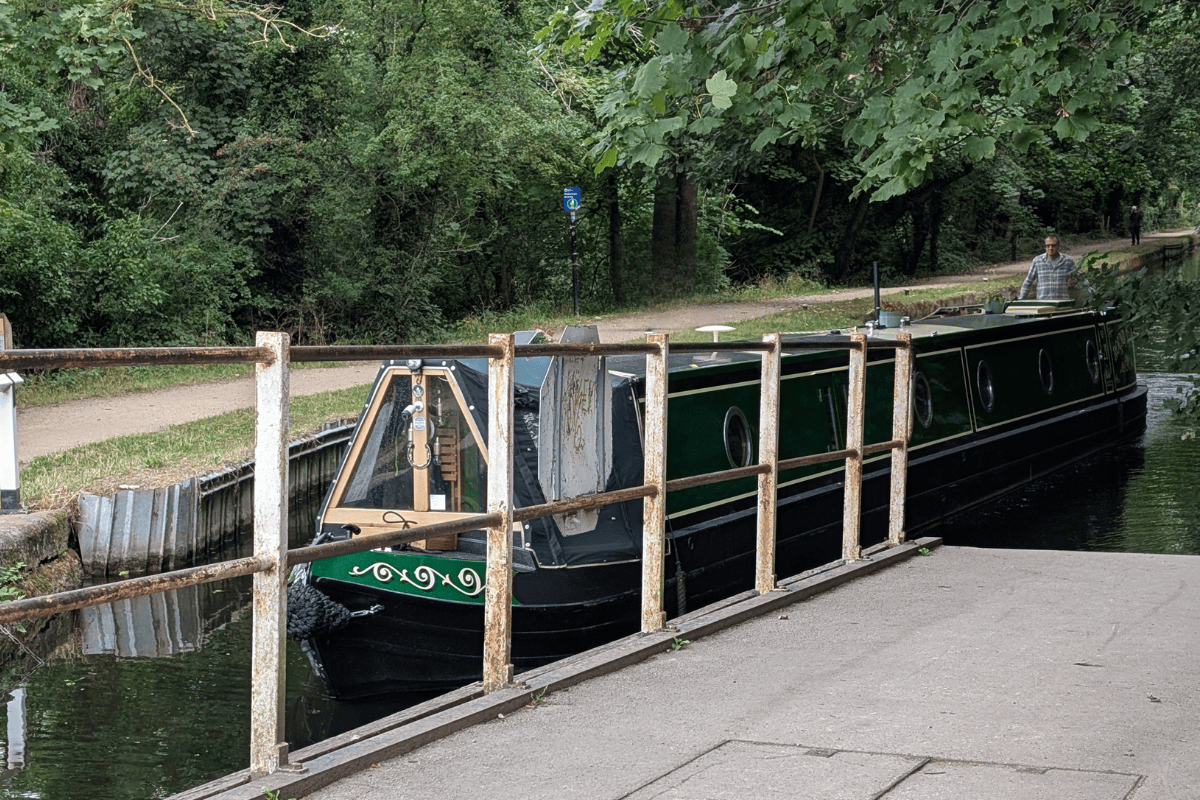
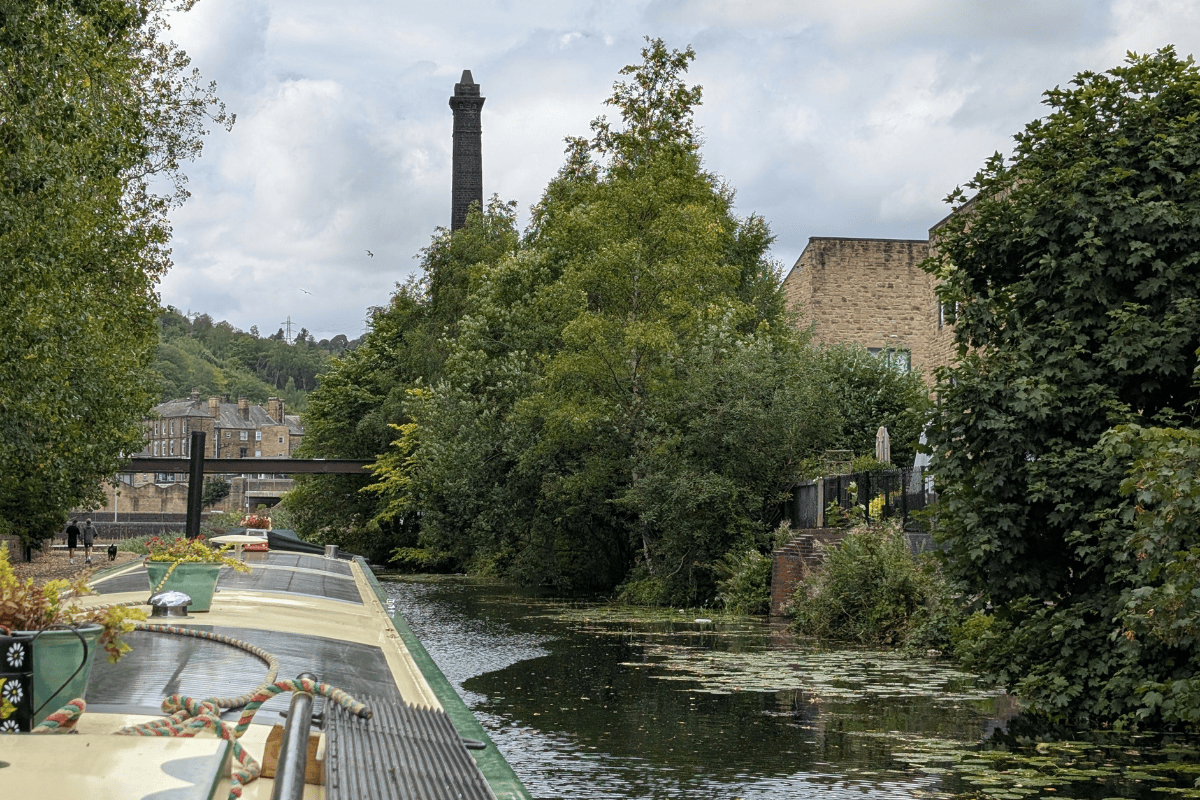
From there, we continued through Shipley and towards Saltaire, passing between the imposing industrial architecture.
For me, this stretch of the canal network really epitomises the wonders of the canals’ industrial past.
It is easy to forget sometimes that these waterways weren’t originally built simply to give people like us somewhere beautiful to cruise on a narrowboat. They were the motorways of their day, carrying raw materials and goods through the heart of Britain’s rapidly growing industrial towns.
As we travelled between these magnificent old buildings, it was easy to imagine the canal at the height of its working life.

Help From Complete Strangers
Our next lock was Hirst Lock, a single with yet another manual swing bridge just beyond it.
This time, however, we had plenty of help.
A young family opened and closed one of the bottom gates for us. John closed some of the paddles while I went ahead to open the swing bridge. As he travelled through the swing bridge, another passer-by stepped in to close the lock gates and ground paddles behind us.
Then there was a young man on a bicycle waiting for me to close the swing bridge, who also offered to help.
It never fails to surprise me just how willing people are to get involved when we are negotiating locks and bridges.
Perhaps it is because it is something a little different from their everyday routine. Or perhaps people are simply curious to see how everything works.
Either way, we are always grateful for the extra pairs of hands.
Beside the River Aire and Over Seven Arches
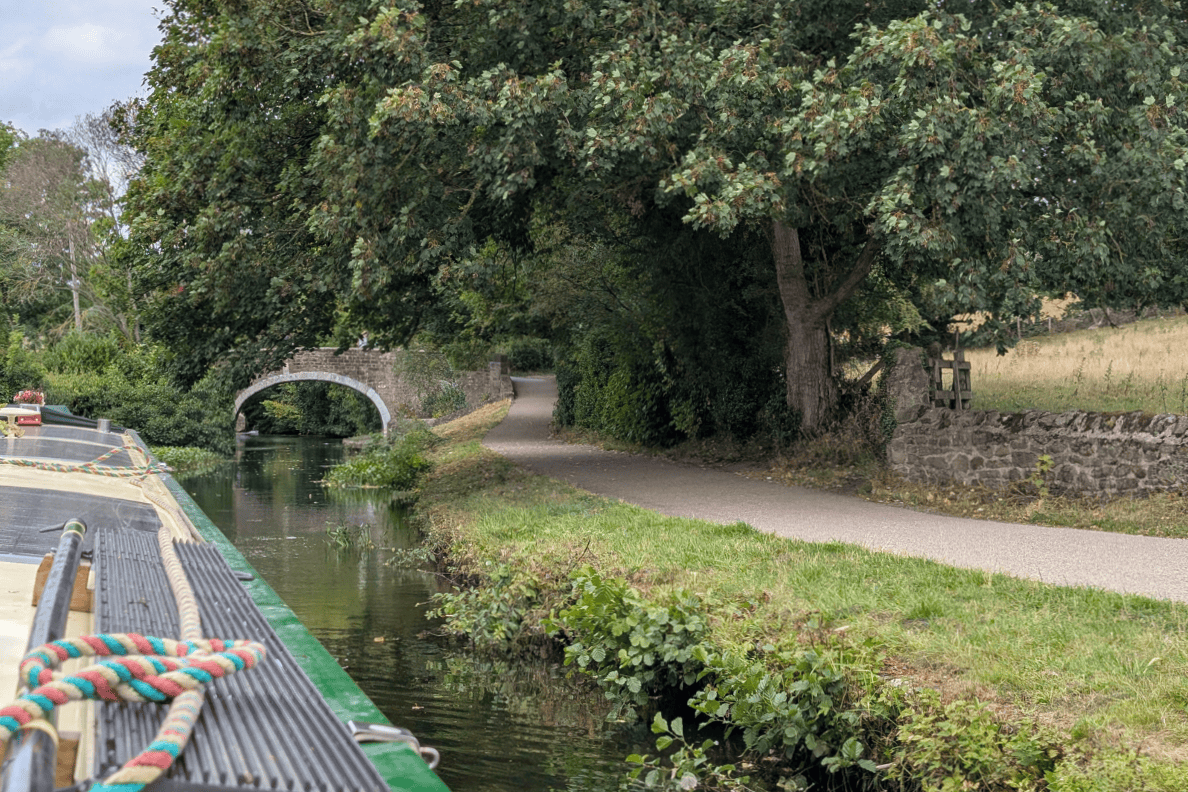
Once we had negotiated the various bridges and locks, we were rewarded with a longer stretch of cruising.
The canal followed alongside the River Aire before taking us over Seven Arches Aqueduct, giving us another reminder of the incredible engineering involved in building this network.
Eventually, we arrived at Dowley Gap, a staircase of two locks.
This time, there were no volunteer lock keepers waiting to lend a hand, but there were plenty of people around who were fascinated by what we were doing and keen to ask questions about how the locks work.
I always enjoy these conversations.
It is lovely to meet people who are genuinely interested in the canals and narrowboat life, and explaining how the locks work is something I never seem to get tired of doing.
Arriving in Bingley
As we continued towards Bingley, the surroundings gradually changed. The canal became increasingly enclosed by roads, businesses and the signs of a busy town.
Finally, at 13:30, exactly five hours after leaving Apperley Bridge, we arrived at our destination.
Round Tuit is now moored at the bottom of the Bingley locks, ready for tomorrow’s adventure.
The Famous Bingley Locks
Bingley is home to two of the most impressive lock flights on the entire canal network: the Bingley 3 Rise and, of course, the famous Bingley 5 Rise.
Both were built as part of the Leeds & Liverpool Canal, one of Britain’s great industrial waterways. The canal itself took many decades to complete, with construction beginning in the 18th century and facing repeated delays caused by funding problems, difficult terrain and disagreements over its route.
The Bingley lock flights were constructed to overcome a significant change in height over a relatively short distance. Rather than building a long series of individual locks with stretches of canal between them, engineers created staircase locks, where the chambers sit directly one after another.
The Bingley 5 Rise, completed in 1774, is particularly remarkable. The five interconnected chambers lift or lower boats by around 18 metres and are considered one of the steepest lock staircases in Britain. At the time of its construction, it was an extraordinary feat of engineering and helped create an important route between the industrial towns of Yorkshire and Lancashire.
Today, of course, it is better known as a spectacular challenge for boaters.
Tomorrow morning, at 10:00, the locks are due to open for us.
Unfortunately, the weather forecast is predicting storms, so it looks as though our journey through the famous Bingley 3 Rise, and 5 Rise could be a rather wet one.
But after being stuck for two weeks, a little rain isn’t going to stop us.
We are ready and rearing to go.

Other Stories:
An Unexpected Stop at Apperley Bridge
- Travel Diary .
Locks, Swing Bridges and a Familiar Boat
- Travel Diary .
Maintenance Complete and the Next Adventure Begins
- Travel Diary .
A Short Cruise to Woodlesford and Preparing for Winter
- Travel Diary .