Date:
From:
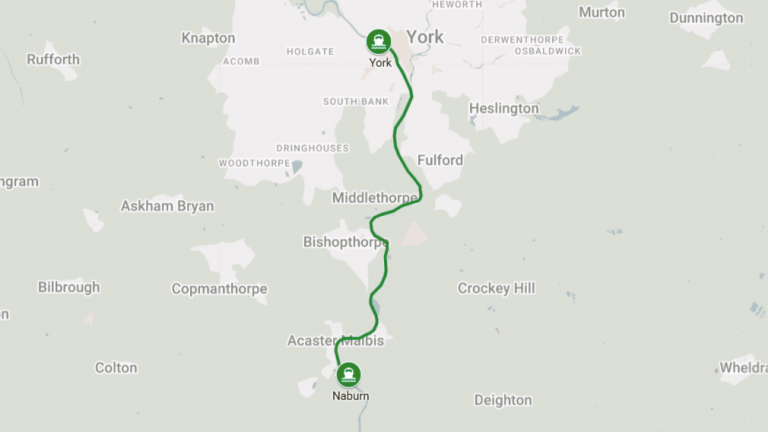
Naburn
To:
York
Waterway:
River Ouse
Travel Time:
1 1/2 hours
Distance:
6 miles
Contents:
The Final Leg to a Favourite City
Thursday marked the final cruising day of this carefully planned journey, and it was one we had been looking forward to for weeks. Ahead of us lay one of our favourite destinations anywhere on the waterways: York.
Leaving Naburn in the morning, we set off along the River Ouse towards the city centre. After successfully navigating the tidal section a few days earlier, this stretch felt much more relaxed. The river was still impressively wide, but now the tides were behind us and the challenges seemed less daunting.
That didn’t mean we could become complacent. This is still a substantial river, and our anchor remained ready for immediate use while our life jackets stayed firmly on. The Ouse commands respect, whatever the state of the tide.
The forecast promised a mixture of sunshine and showers, and the weather delivered exactly that. One moment dark clouds drifted overhead, sending ripples across the water, and the next the sun would break through, illuminating the riverbanks in brilliant summer light.
A River of Cruisers
The journey itself was short, taking only around an hour and a half, but it was a delightful cruise.
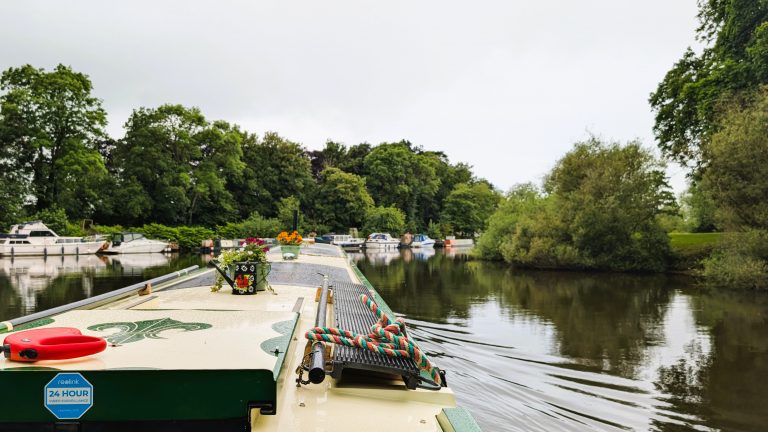
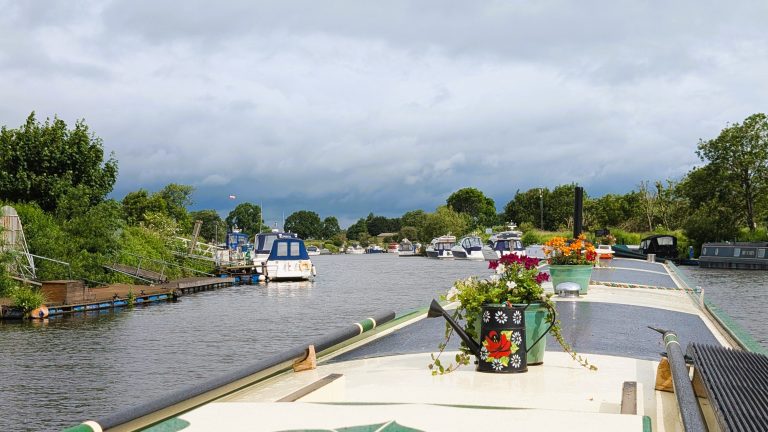
For much of the way, large GRP cruisers lined the banks. This stretch of the Ouse is clearly a favourite playground for river boats during the summer months. Interestingly, narrowboats were few and far between, making us feel slightly unusual among the sleek white cruisers.
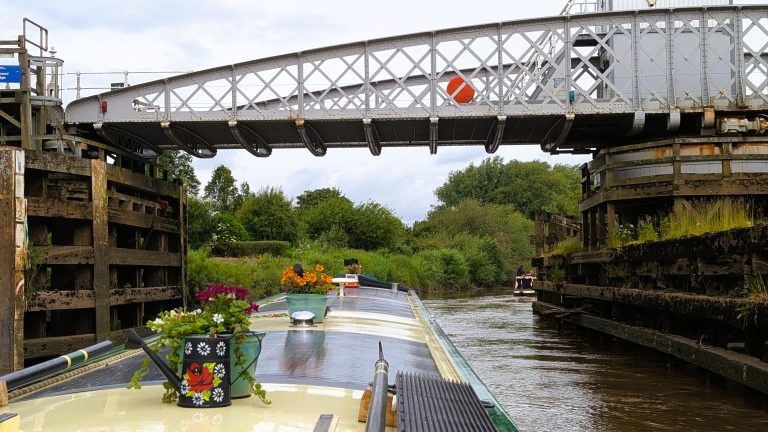
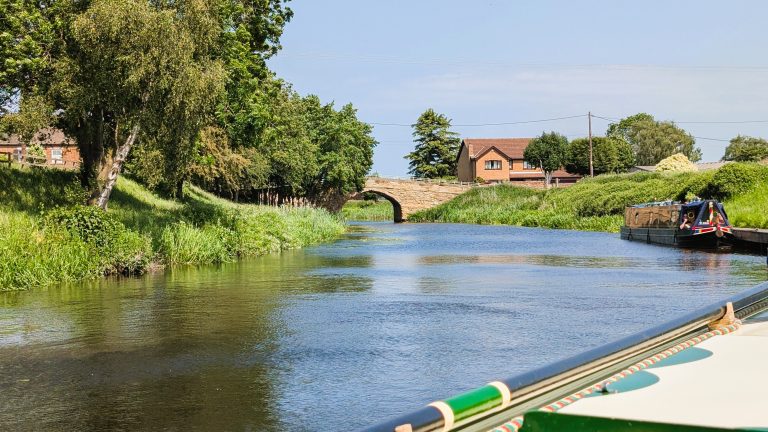
The scenery was beautiful. Wide expanses of open water curved gently through the landscape, bordered by mature trees whose branches stretched over the river’s edge. Every so often we passed a marina, rowing club or boating facility, reminders that this river has long been an important recreational waterway as well as a historic transport route.
It was an easy, enjoyable cruise and before long the unmistakable skyline of York began to appear ahead of us.
Entering the Ancient City
Arriving by water is undoubtedly one of the most magical ways to experience York.
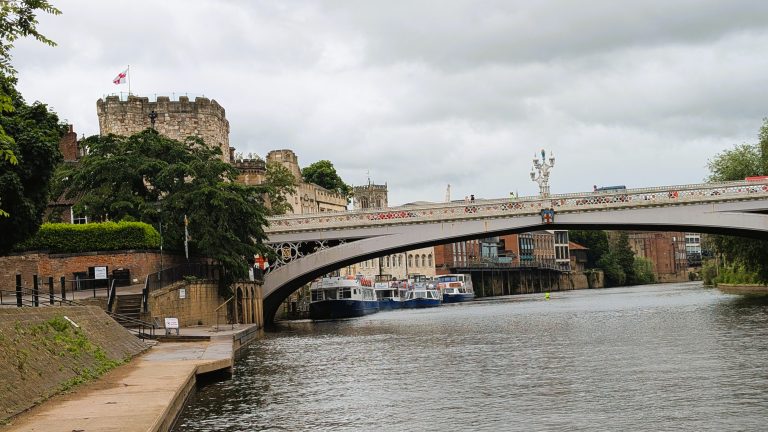
As we approached the city centre, modern buildings stood alongside centuries-old structures, creating a fascinating blend of old and new. The river carried us beneath York’s iconic bridges while the city gradually unfolded around us.
One of the great advantages of York is the abundance of visitor moorings. We found space on Dame Judi Dench Walk and tied up on the rings beside a beautiful riverside pathway. It felt like the perfect spot. Just beyond the walkway, steps lead directly up to the Museum Gardens, providing a peaceful green escape in the heart of the city.
The excitement of having our floating home moored in one of Britain’s most historic cities was hard to beat. For the next few days, York would quite literally be on our doorstep.
That evening, after we had settled in, John searched online and managed to secure theatre tickets for Tuesday night. Suddenly our stay included not only sightseeing and riverside walks but a trip to the theatre as well. It felt like the perfect city break – just with our own accommodation attached.
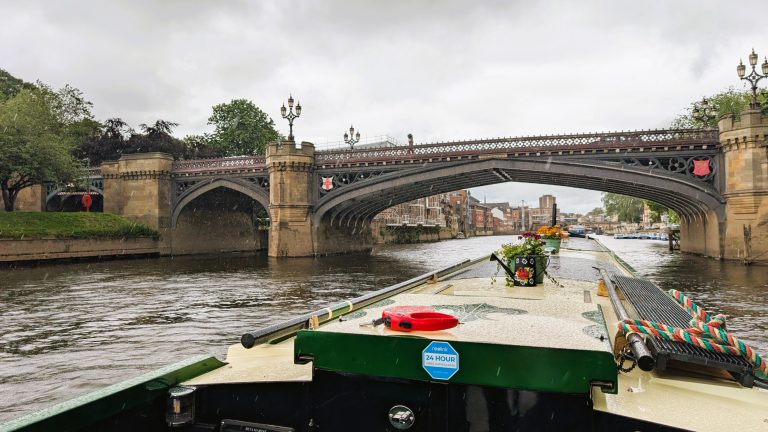
Naburn to York City Centre | A Beautiful Cruise on the River Ouse
When the River Had Other Plans
Of course, rivers have a habit of reminding boaters that they are always in charge.
One reason we had planned this York visit for summer was to minimise the risk of flooding. York is well known for its dramatic winter floods, and we certainly had no desire to become part of that story.
Just to be safe, John keeps a close eye on an app that monitors river levels. On Thursday evening, however, it showed something concerning: the water level was forecast to rise significantly.
At first it seemed unlikely to cause any problems.
Then, during the night, the river began to climb.
John barely slept. By 6.30 on Friday morning, he woke me with the words every boater dreads hearing:
“The water’s too high—we need to move.”
Looking outside, the seriousness of the situation became immediately clear. The riverside walkway was already underwater, and the boat was sitting noticeably higher than it had been the previous evening.
The danger wasn’t the rising water itself. The concern was what might happen when it eventually receded. If levels rose too far, the boat could potentially end up resting on higher ground once the river dropped again, creating a dangerous situation.
There was no choice. We had to move!
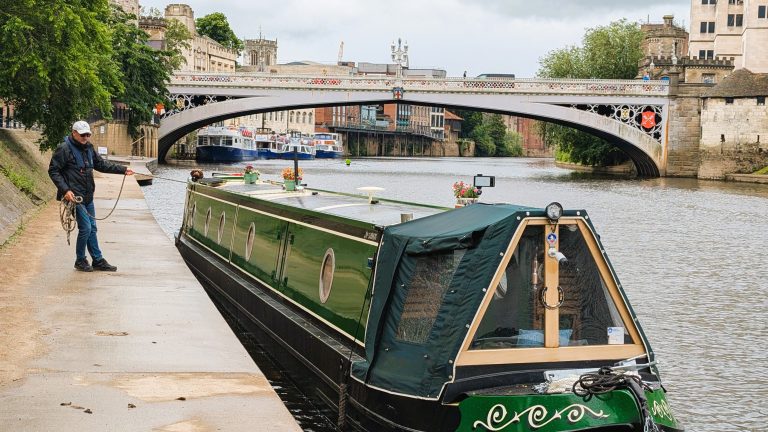
A Challenging Relocation
The operation was far from straightforward.
John waded through the floodwater to untie the boat while I prepared aboard. Thankfully, on such a wide stretch of river, turning the boat around was relatively easy. He manoeuvred us back through the bridge, spun the boat once more and headed for a safer mooring against a high riverside wall equipped with wire risers.
These risers are specifically designed to allow boats to move up and down as water levels change, making them far safer during periods of rising river levels.
The challenge was the speed of the current.
The river was now flowing hard, pulling relentlessly downstream. John jumped ashore to secure the ropes while I remained on the stern battling with the controls. My job was to keep the boat close enough to the wall for him to work while preventing the current from dragging us away.
Being suddenly pulled from bed and thrust into such an intense situation was nerve wracking. Everything happened quickly, and there was little time to think.
Eventually, though, the ropes were secured, the boat settled into position and we could finally relax.
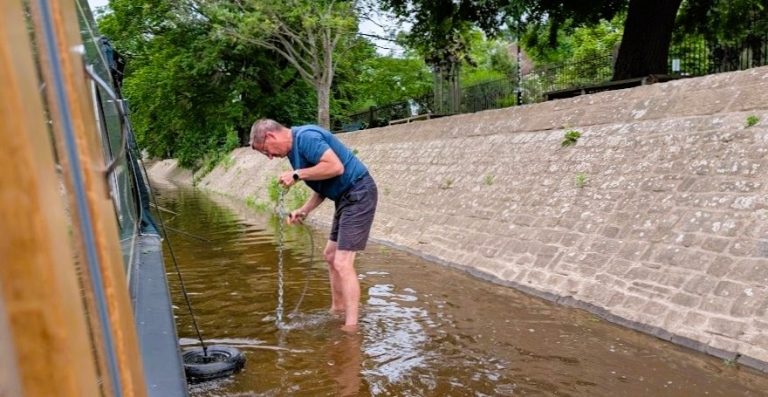
Safe but Slightly Less Peaceful
The experience served as a powerful reminder of just how quickly conditions can change on the River Ouse.
One day we were enjoying a tranquil riverside mooring beside the Museum Gardens. The next morning, we were navigating floodwater before breakfast.
Fortunately, we are now safely moored where the boat can rise and fall with the changing river levels. With more rain forecast over the weekend, that peace of mind is invaluable.
There is, however, one small downside.
Our peaceful retreat has been replaced by a mooring directly opposite two pubs and a nightclub.
The nights are certainly noisier than we had hoped, but there is a silver lining. We are now right in the heart of York, within easy walking distance of everything the city has to offer and, most importantly, we know the boat is secure.
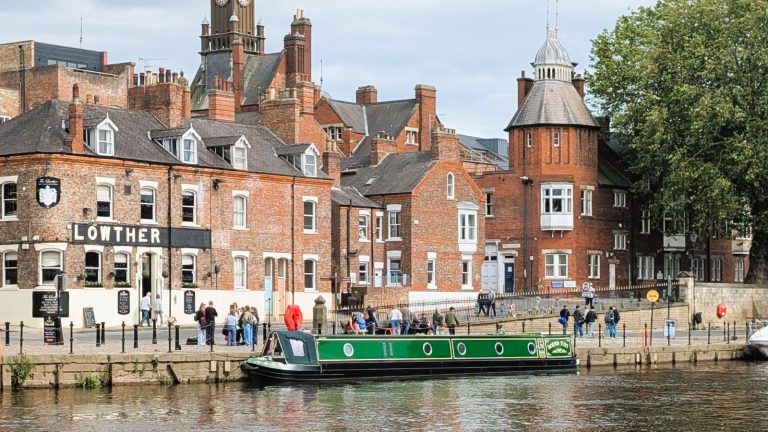
Walking Through a Thousand Years of History
One of the reasons York remains such a special place is that history surrounds you at every turn. Long before narrowboats cruised the Ouse, Vikings, Romans, merchants and medieval craftsmen walked these same streets.
The city flourished during the medieval period and became one of the most important centres in England. Its wealth came largely from trade, with goods arriving by river and travelling onwards throughout the country. The Ouse itself played a vital role in York’s prosperity, connecting the city to the wider world.
Today, evidence of that rich past can still be found everywhere. The magnificent York Minster dominates the skyline, its towers visible from many points along the river. Narrow medieval streets such as The Shambles weave between timber framed buildings that seem almost unchanged by the passing centuries. Fragments of the ancient city walls still encircle much of York, offering views across rooftops that blend medieval stonework with modern life.
Perhaps that is what makes arriving by boat feel so special. As we cruise beneath the bridges and tie up in the city centre, we are following a route that people have used for hundreds of years. The river remains the thread that connects York’s past and present.
For now, despite the rising water and the unexpected early morning drama, we are exactly where we wanted to be – safely moored in one of England’s most beautiful and historic cities, with several days of exploration still to come.