Date:
From:
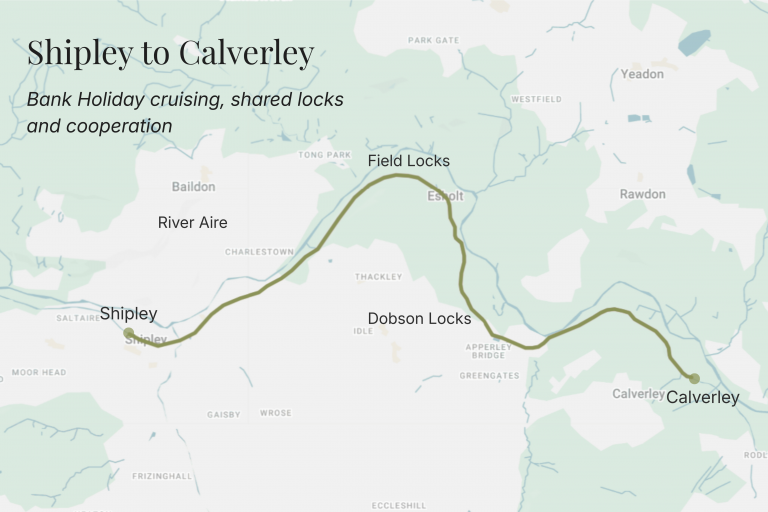
Shipley
To:
Calverley
Waterway:
Leeds and Liverpool Canal
Travel Time:
5 1/2 hours
Distance:
6 miles
Contents:
A soft start under grey skies
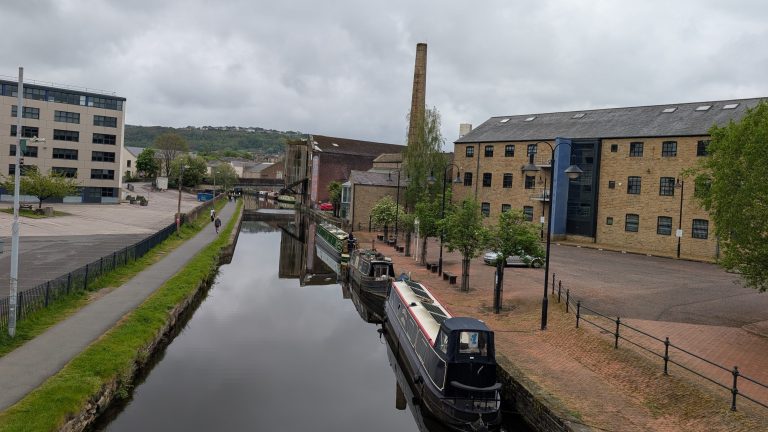
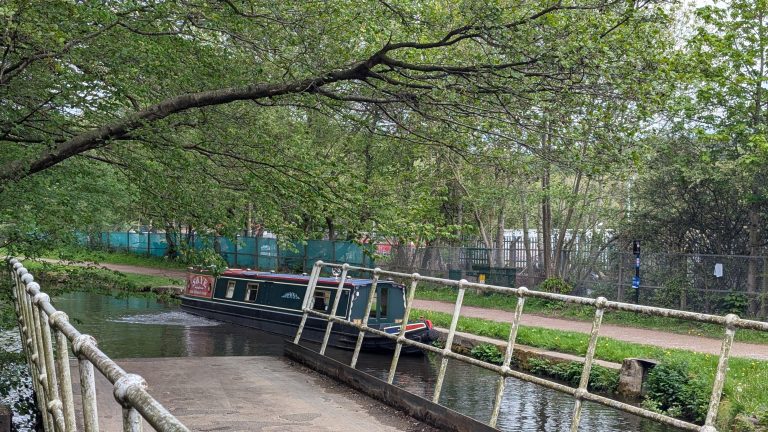
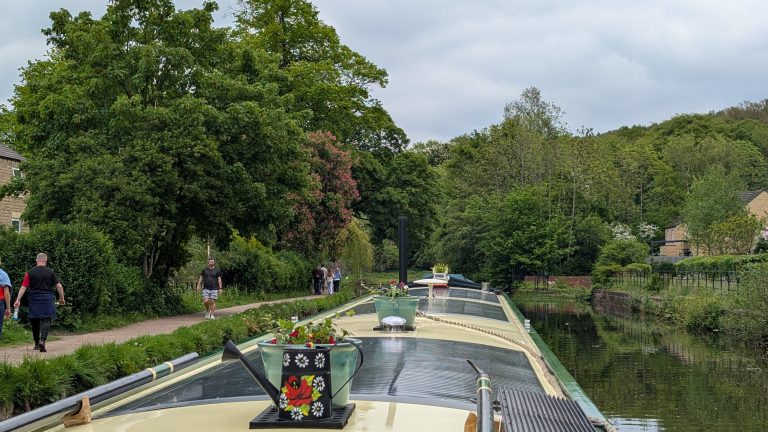
We slipped away from Shipley at 09:45, knowing this wouldn’t be a short cruise but a full day of steady progress towards Leeds. The sky hung low and grey at first – warm but still carrying yesterday’s rain in the slightly wet grass around the locks.
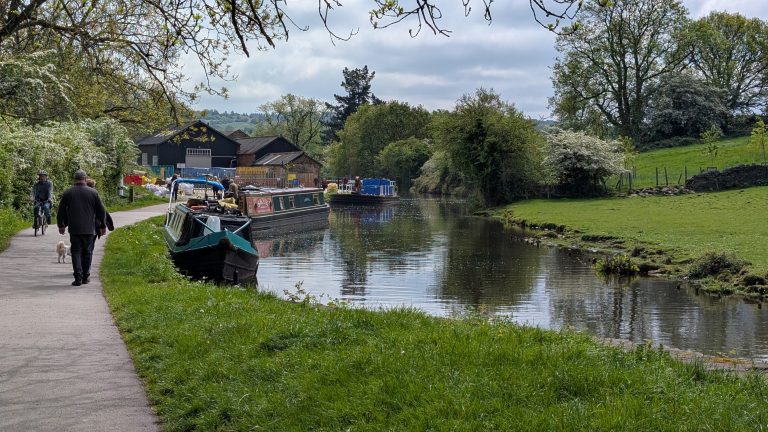
For the first stretch I took to the towpath with Boasley, leaving John to bring the boat on behind. Something I keep noticing on this canal is how abruptly the scenery shifts. One moment constrained by industry and houses; the next it opens out to green spaces that are unexpectedly rural.
The railway runs close along this stretch, a reminder that this corridor has always been about moving goods and people.
Swing bridges and slow progress
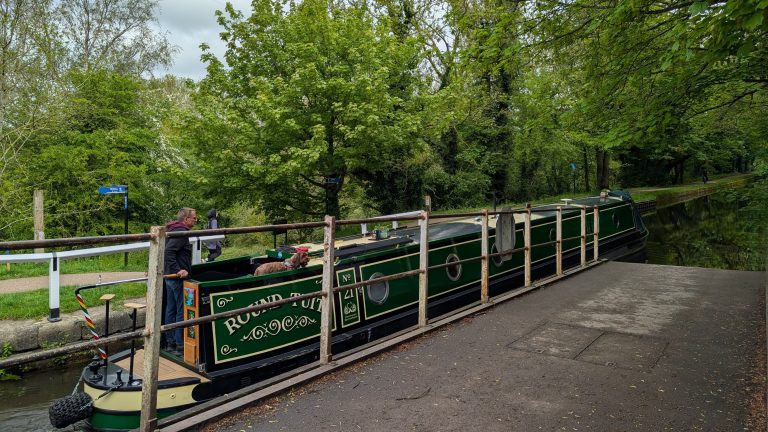
It wasn’t long before the pattern of today’s cruise revealed itself. Dock Swing Bridge… then Oddies… each one a small pause in our progress and a reminder that this stretch demands patience.
As we approached Buck Hill Swing Bridge, we were told by someone on the towpath that there was a single-handed boater ahead. And moments later, at the top of the Field Locks (a staircase of three), we met him – Martin.
Three locks, two boats, one plan
I asked if he would rather travel down the locks alone, or if he’d like to share them with us. His answer was immediate – he had some health issues and would welcome the help.
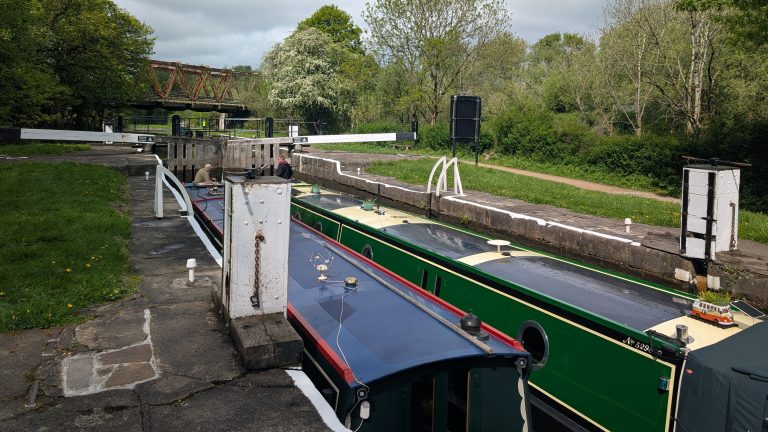
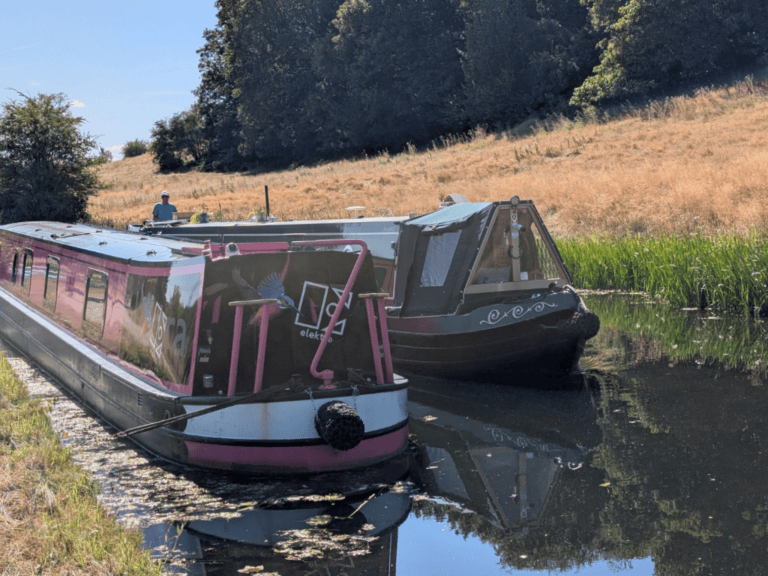
However, there was a challenge that needed to be overcome because we had to get ours at 62ft boat and his at 58ft boat into the locks and out again without risking either of them getting stuck. So, John and Martin discussed exactly what they were going to do before starting.
Fortunately, these locks are well marked and seemed to be manageable, so I started to set them up:
- Bottom lock emptied fully
- Middle lock filled to the green marker
- Top lock filled completely
Once everything was carefully prepared our descent could begin.
John and Martin handled the boats with care and coordinated with each other throughout – Martin exited each chamber first and they switched sides as they went. This gave John just enough room to ease our boat back, avoiding the boat’s stern being swamped by the water leaking through the top gates, and slide alongside into the next lock.
I worked the paddles and gates alone, taking it steadily. A few turns at a time and carefully watching the bow, while John kept a close eye on the stern.
By working together, the three of us got both boats safely to the bottom – no catching and no damage – just a controlled, careful passage down.
Two boats in one lock use half the water and, on the Leeds and Liverpool Canal, where water levels can be unpredictable that matters.
Travelling together
Martin was heading to the services before Dobson Locks, so we agree to travel there together.
That meant I dealt with the swing bridges (Strangford and Idle), while both men stayed aboard the boats.
Somewhere between the locks and bridges stories were exchanged. Martin has had his boat for 21 years and it was new when he bought it, just like ours. A gentle reminder that we’re still only at the beginning of adventure.
Water, waiting and bank holiday life
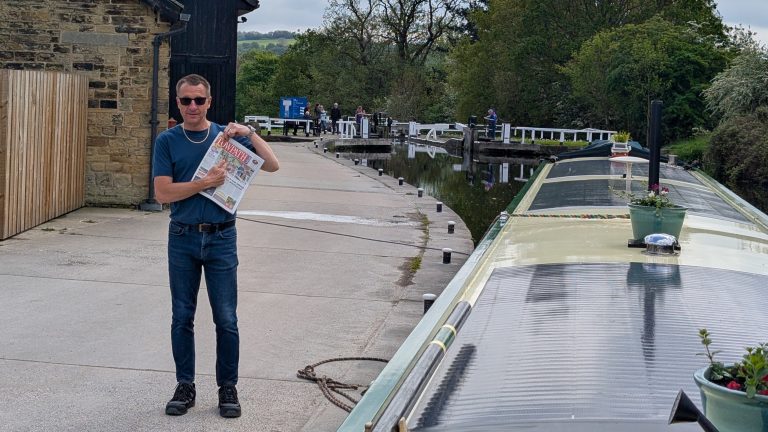
We moored up at the CRT services, said our goodbyes and started to fill up our water tank but low water pressure meant an hour long pause in the journey. However, on this lovely Bank Holiday Monday it hardly mattered. We sat with coffee on the stern, chatting to passers-by, watching the steady flow of walkers, cyclists and families making the most of the towpath.
Locks with good company
The Dobson staircase locks (a pair this time) sit right beside the boaters’ services, and today they came with an added bonus – volunteer lock keepers.
While we filled the tank, they set the locks ahead and chatted with us about the work they’d been doing around the site. There’s even a small greenhouse tucked beside the lock, so John handed over our spare compost from last week’s planting.
“Traveling the canal network is about cooperation and leaving things (locks, places, even people) just a little better than you found them.”
Noticing that the bin compound was in a bit of a state, John determinedly set about tidying it with gloves on and rubbish bag in hand. It felt like a fair exchange; help given and received.
With the volunteers and a few waiting boaters pitching in, descending the locks was easy and full of conversation.
Onward towards Calverley
Beyond the locks came more swing bridges (Millman and Calverley Lodge) as we moved into open countryside again.
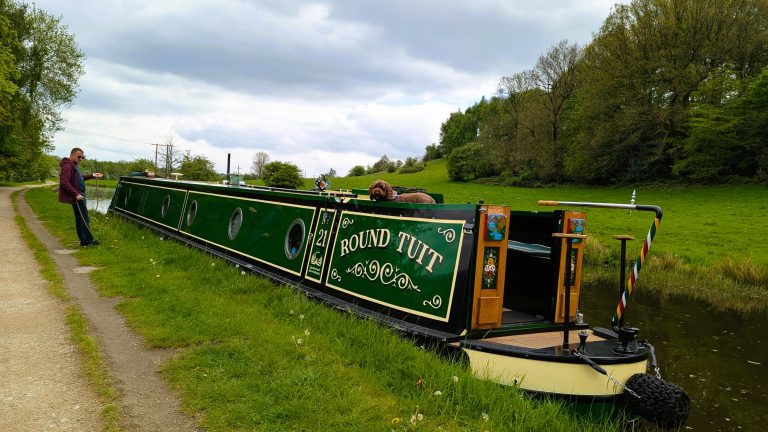
We found a peaceful mooring just short of Rodley.
Throughout today’s cruise we have been surrounded by the heady scent from the Hawthorn in bloom. When the sun finally broke through and warmed the air, the towpath filled with that unmistakable sweetness – one of those fleeting and perfect details that make this time of year on the canal so special.
(Though, briefly interrupted by a less charming smell when passing the sewage works…)
Encounters along the way
The towpath was alive with walkers, cyclists, paddleboarders and canoeists today.
Among them was Josh Phillips, travelling 126 miles from Leeds to Liverpool on a paddleboard. He’s raising money for the British Heart Foundation and Cruse Bereavement Support (a charity that’s also close to our own hearts), in memory of his father.
I’ll put a link to his fundraising page below.
Good luck Josh – as you said, “only 9 more days to go”.
Tying up and small repairs
We moored at 15:15 – five and a half hours after setting off, though an hour of that was spent at the water point.
Tea followed, naturally.
Then John turned his attention to the stove chimney. Yesterday’s rain had revealed a small problem, water seeping in around the collar.
He used this afternoon to begin the repair: removing the collar, sanding back rust and repainting the area.
Tomorrow he’ll apply fresh mastic and hopefully we’ll have a watertight seal.
A canal built for purpose
This stretch of the Leeds and Liverpool Canal tells its own story if you look closely.
Construction began in 1770 under the Leeds and Liverpool Canal Company, with early input from James Brindley and later refinements made by John Rennie. It took over four decades to complete; a long enough timeline for ideas and approaches to evolve along the route.
The swing bridges we negotiated today are no accident. This part of the canal crosses farmland and established routes so instead of building fixed bridges with steep ramps engineers designed movable crossings that could open for boats and close for everyday use. This was a simple, practical and cost-effective solution.
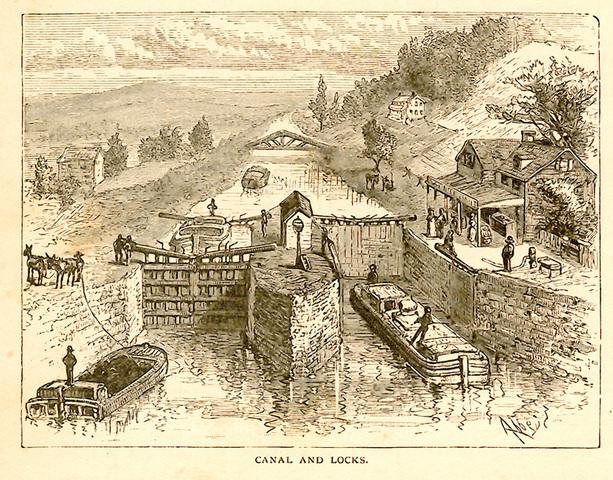
The staircase locks, like Field and Dobson, solve a different problem. Where the land rises sharply but space is limited, stacking locks directly on top of each other avoids the need for long flights. They’re efficient in terms of space but require careful coordination; something we experienced first-hand today.
And then there’s the key to all canal life: water. This canal has always had to manage its supply carefully. Sharing locks, conserving levels and working together isn’t just tradition, it’s essential.
Ship canal locks under construction (1915). Source: Wikimedia Commons (public domain).