
Date:
From:
Kirkstall
To:
Leeds
Waterway:
Leeds and Liverpool Canal
Travel Time:
2 1/2 hours
Distance:
3 miles
Contents:
There are some days on the canal that are made up of endless lock flights, stubborn bridges and the feeling that every mile has been hard-earned.
And then there are days like today.
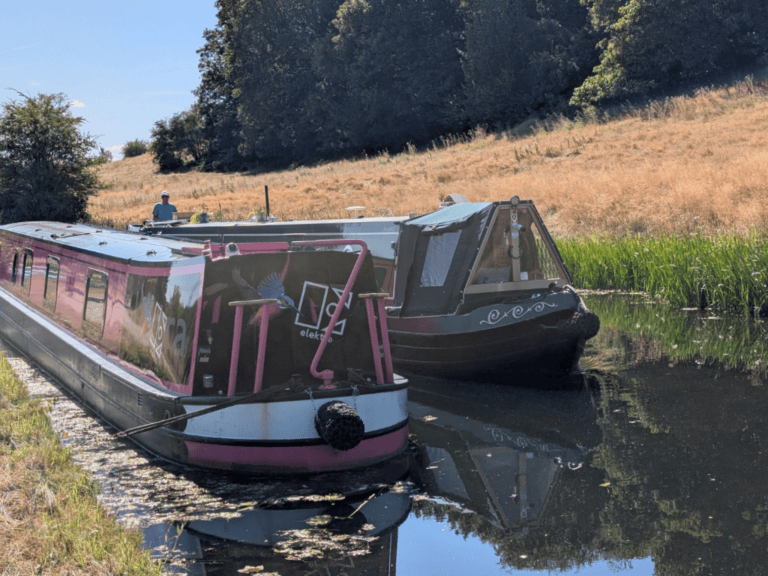
We left our mooring in Kirkstall mid-morning beneath a blanket of pale grey cloud. The bright sunshine of recent days had disappeared, and it was replaced with cool but still air.
Our cruise towards Spring Garden Lock was gentle and unhurried, the sort of stretch where the landscape slowly changes around you almost without notice.
I walk ahead along the towpath, a short distance to Oddy Locks (a staircase of two). It’s important to be mindful when working the locks: gates closed behind you, paddles lowered, anti-vandal locks secured properly – ready for the next boat.
Only once everything was safely reset did I hop back aboard.
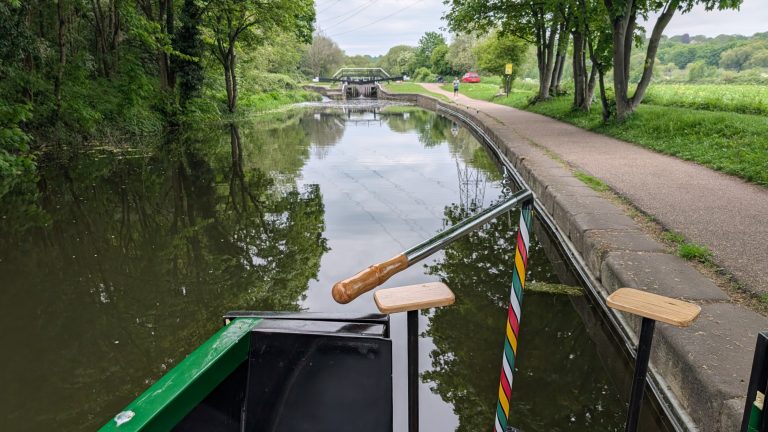
We have entered quite a few cities by narrowboat now, and often the experience follows a familiar pattern.
The greenery fades, the water grows murkier, graffiti thickens beneath bridges and litter gathers in corners where the current slows. Urban canals can sometimes feel forgotten – squeezed reluctantly between roads, warehouses and railway lines.
But Leeds feels remarkably different.
Yes, the signs of the city gradually emerged around us: the distant rumble of trains, heavier traffic overhead, taller buildings beginning to dominate the skyline. But despite this, the canal somehow remained green almost all the way into the centre.
Trees continued to crowd the banks and reflections still shimmered softly on the water. Even the graffiti felt less oppressive somehow, woven into the urban landscape rather than overwhelming it.
It was not the harsh industrial entrance we had expected.
Instead, Leeds revealed itself slowly – softer around the edges than many city waterways we have travelled through.

At St Ann’s Lock we felt as if we were getting close to the centre, and then we continued onto Office Lock – our final lock of the day.
City centre locks always bring a slight shift in atmosphere.
Suddenly there are office workers crossing gates, shoppers stopping to watch, curious tourists asking questions and pedestrians weaving around the ropes. The bridge across Office Lock is clearly a busy thoroughfare so I tried to keep everything moving as smoothly as possible, waving people through whenever I could while opening and closing the gates.
Thankfully, fortune was on our side.
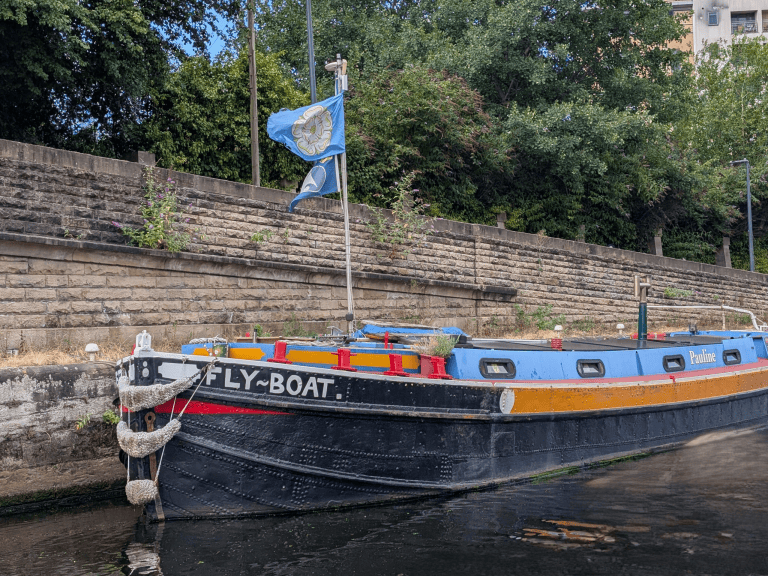
We found the very last mooring, just before the river lock.
John carefully secured the boat to the bollards while I took Boasley for a quick walk through the city streets. By the time I returned, we had already fallen into one of the canal’s oldest traditions: chatting to another boater.

Malcolm’s boat was moored opposite ours and tomorrow he plans to travel (single handed) the route we have just completed.
Within minutes we were exchanging stories, warnings and recommendations in the easy way that boaters often do. We talked him through some of the locks behind us, offering advice from our own recent experience, while he filled us in on the next stage of our journey ahead – good mooring spots, useful shops, recommended pubs and tips for navigating the river sections towards Castleford.
It is one of the things I love most about canal life.
Complete strangers become temporary neighbours almost instantly.
A towpath conversation can begin with a question about water levels and end with local knowledge that proves invaluable days later.

One of the strongest memories from today, however, may end up being the wild garlic.
The canal banks were overflowing with it. Clusters of delicate white flowers lined the towpath and the unmistakable smell drifted through the cool morning air.
For many people, wild garlic evokes romantic thoughts of spring foraging and countryside cooking.
For me, unfortunately, it brings back memories of one truly dreadful camping meal.
A few years ago, while in our camper van, John enthusiastically foraged wild garlic and added it to our dinner. The resulting meal was overpowering in every possible way – the smell, the flavour and, regrettably, the stomach aches that followed.
Ever since then, the scent of wild garlic instantly transports me back to that disastrous evening.
John still finds this story hilarious.
I remain slightly traumatised.

Now we are moored securely in the very centre of Leeds, surrounded by waterside offices, restaurants, bridges and the steady hum of city life.
And yet, somehow, it still feels calm.
Our first impression of Leeds has been overwhelmingly positive. The mooring feels secure, the city feels welcoming and everything we could possibly need is within easy walking distance.
Tomorrow we will leave the boat behind for the day and enjoy the city properly – museums, shops, lunch with our nephew and all the energy that city life brings; before we continue onwards in a few days’ time, onto the River Aire.
Next week the boat will be lifted from the water, but for now we are content simply to sit quietly in the centre of the city and enjoy this surprisingly peaceful arrival.

Modern Leeds is a thriving cultural and commercial city, but much of its history was shaped by the waterways that still thread through it today.
The arrival of the Leeds and Liverpool Canal transformed Leeds during the Industrial Revolution, connecting Yorkshire’s wool and engineering industries with Liverpool and the wider world beyond. Coal, limestone, textiles and manufactured goods once travelled constantly along this water, helping Leeds grow into one of the great industrial cities of northern England.
The canal corridors that feel peaceful today would once have been crowded with working boats, warehouses and smoking mills. Labourers loaded cargo by hand along wharfs that now sit beside modern apartments, cafés and office buildings.
Many reminders of that prosperous Victorian era still remain. Buildings such as Leeds Corn Exchange and Leeds Town Hall reflect the confidence and ambition of a city that grew rapidly through trade, manufacturing and engineering.
Today, Leeds feels like a city that has managed to balance its industrial heritage with modern regeneration remarkably well. The waterways that once powered commerce now provide green corridors through the city centre – spaces for walkers, cyclists, wildlife and travelling boaters like us.
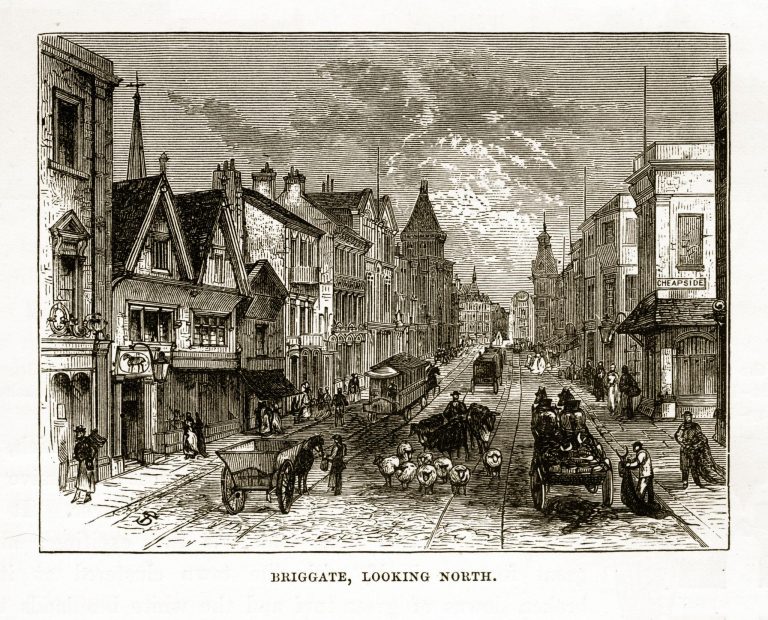
Briggate, Leeds (c.1880s), Victorian engraving, English School. Public domain via Wikimedia Commons.