Date:
From:
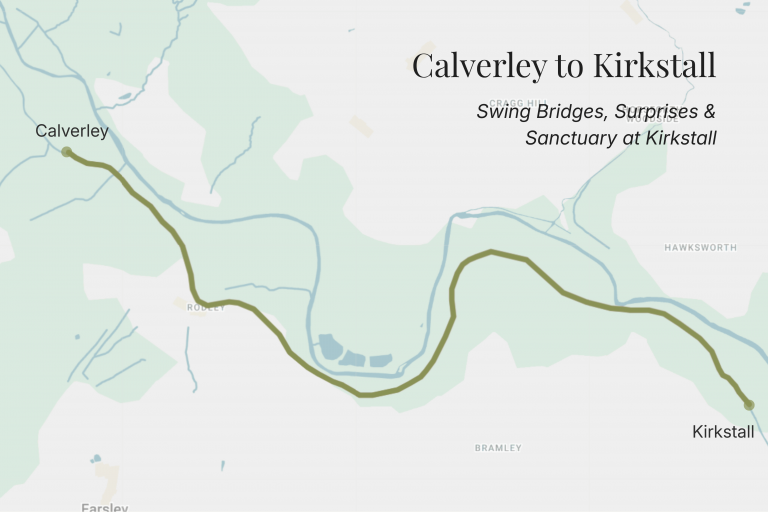
Calverley
To:
Kirkstall
Waterway:
Leeds and Liverpool Canal
Travel Time:
4 hours
Distance:
3 1/2 miles
Contents:
Today’s cruise was meant to be a short hop from Calverley, but it turned into something altogether more demanding, more memorable and, in the end, more rewarding.
We cast off at 10:30, expecting an easy cruise and by 14:30, we were moored in Kirkstall. We travelled further than planned and were all very tiered at the end of a very challenging day.
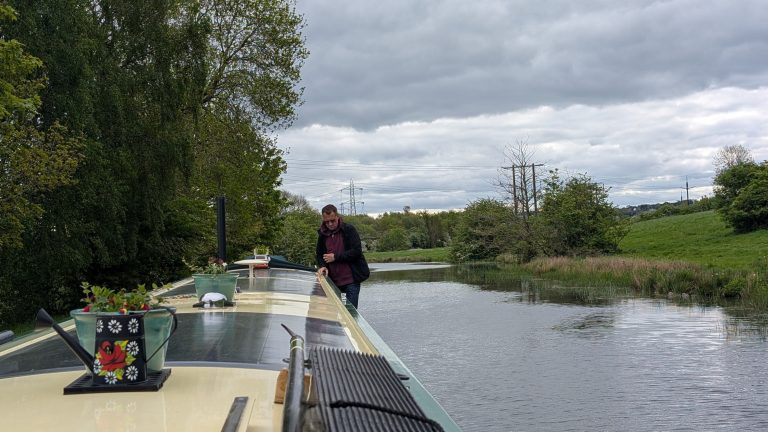
I set off on foot toward the first swing bridge, leaving John to follow with the boat and Boasley observing.
Owl Swing Bridge came first. Its design is simple (as always), but it was stubborn to negotiate. The anti-vandal mechanism had been tightened to what felt like an unreasonable degree, so I needed John to tie the boat up and come to help me release it.
At Rodley, things didn’t get much smoother. The bridge was catching on something beneath (possibly a rock) making the whole operation awkward and heavy. Once again, help was needed and this came from a friendly passer-by.
One of the unspoken truths of canal life is that you are rarely alone for long, and I am always grateful for the assistance of strangers.
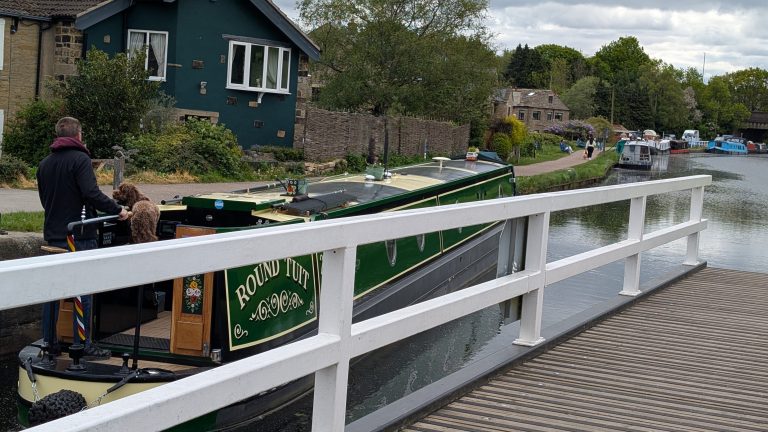
And then… Moss Swing Bridge.
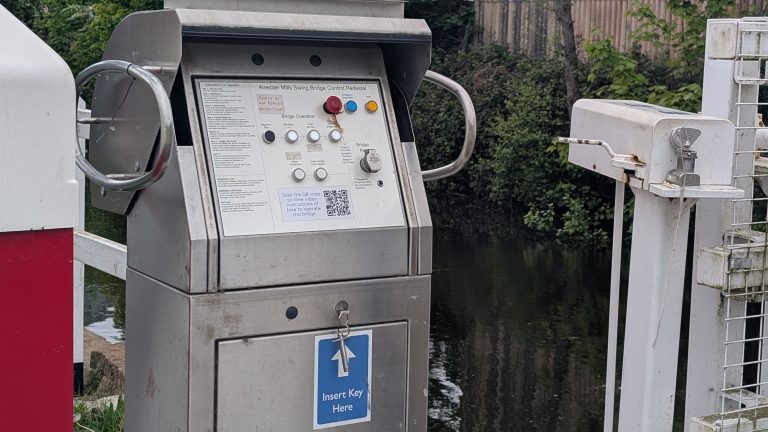
From a distance, it looked reassuringly modern – electronically operated, the sort that usually promises to be easy. CRT key in hand, I approached confidently.
But that confidence didn’t last long.
What I found was, without exaggeration, the most complex bridge I’ve encountered so far – and quite possibly one of the most complicated on the entire network.
If you’re a boater, please prepare in advance for this challenge!
The signage alone was enough to unsettle me with the visible instructions beginning at step five and no obvious sign of steps one to four. It felt like arriving halfway through a conversation and being expected to understand everything. In the end I did find the first part of the instructions inside the control panel.
This is my understanding of how to work the bridge:
You’ll find the red flywheel at the other end of the bridge, and this required many more turns before the bridge will finally begin to move.
Then, once the boat is through, the entire process has to be repeated in reversed.
Only then can you retrieve your CRT key and the traffic can cross.
“I have to admit that I was overwhelmed by the whole thing.”
But this is where my story gets better: a bridge keeper was on duty, and without his calm guidance, I doubt that I would have managed it at all. When asked how many turns it takes to open and close the bridge, he said, almost casually, “about 168.”
One hundred and sixty-eight turns!
After four swing bridges, I might have hoped for a gentler stretch. Instead, we arrived at Newlay Locks (a staircase of three), but I’m happy say that a good surprise awaited.
A CRT lock keeper was ready for us, having been alerted by the bridge keeper upstream. That type of coordination, that we occasionally find along the canals, never ceases to impress.
As we began setting the locks, another boat rounded the bend – perfect timing. Sharing the locks made the process smoother, though not necessarily easier. Water levels in the lower chambers needed careful adjusting, and the gates were far from watertight.
John, standing at the stern, took the brunt of it as water streamed through the gates, leaving him battling to keep the back of the boat as dry as possible.
With help from two lock keepers, another boater and a handful of passers-by we worked our way through. There’s a camaraderie in these moments – strangers becoming teammates, if only briefly.
We continued this shared journey with Pat and Dave through Forge Locks (another staircase of three) and finally Kirkstall Lock, a single and welcome last step before the end of today’s travels.
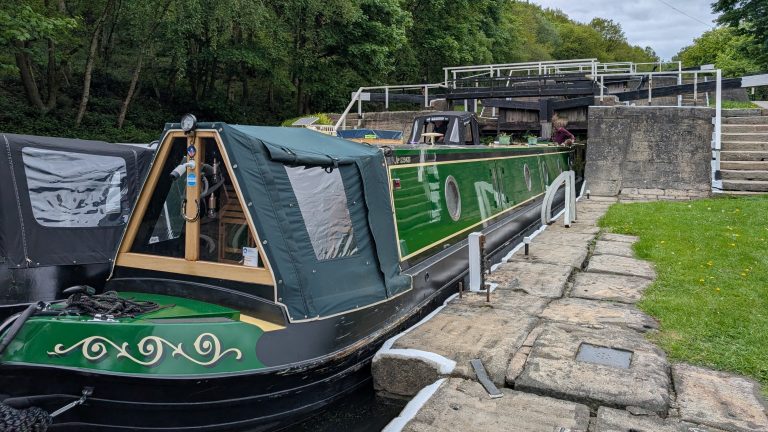
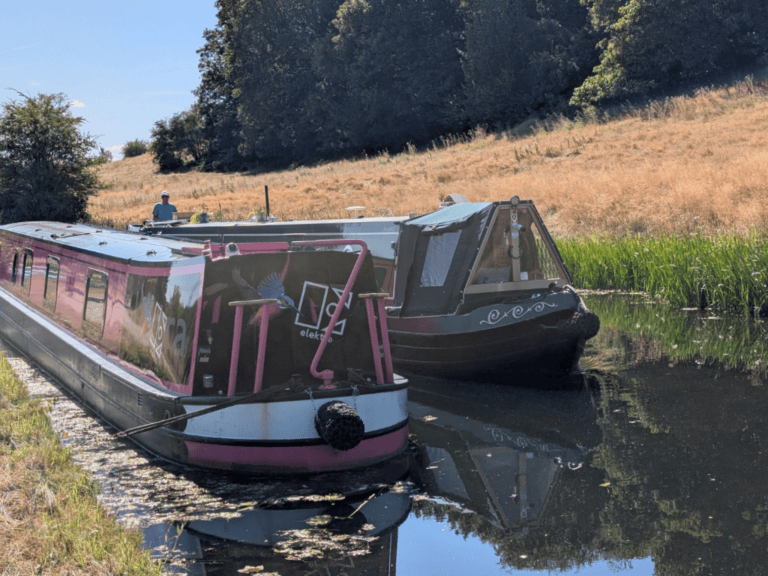
We moored up behind Pat and Dave, in what must be one of the most unexpectedly pleasant spots, just 3 miles from the city.
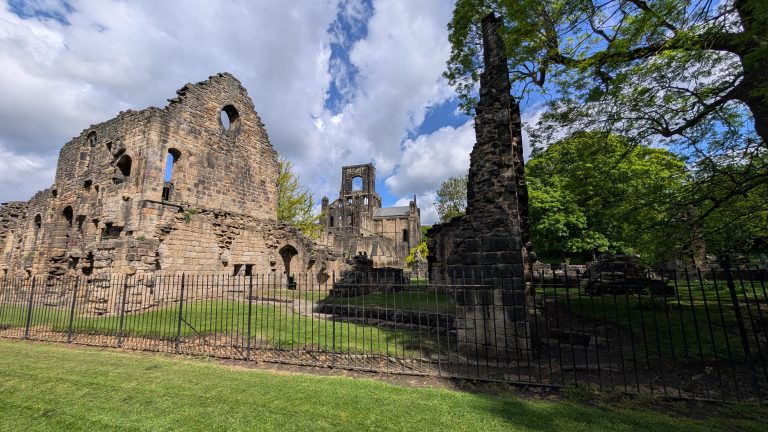
Across the water lie the atmospheric ruins of Kirkstall Abbey, with the ancient stones framed by green trees. Between the canal and the railway stretches an expanse of long grass, giving the whole place a sense of space and calm.
For Boasley, it’s nothing short of paradise – room to run, explore and simply be.
For me, it’s relief to have stopped.
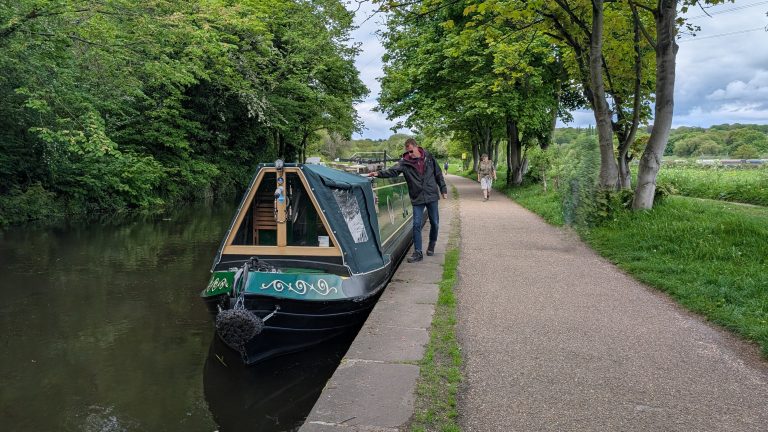
After several heavy days of locks and swing bridges, exhaustion has well and truly set in. So, we’ll stay here on Wednesday and head into Leeds on Thursday.
Tomorrow, we’ll take a breath and explore the abbey ruins.
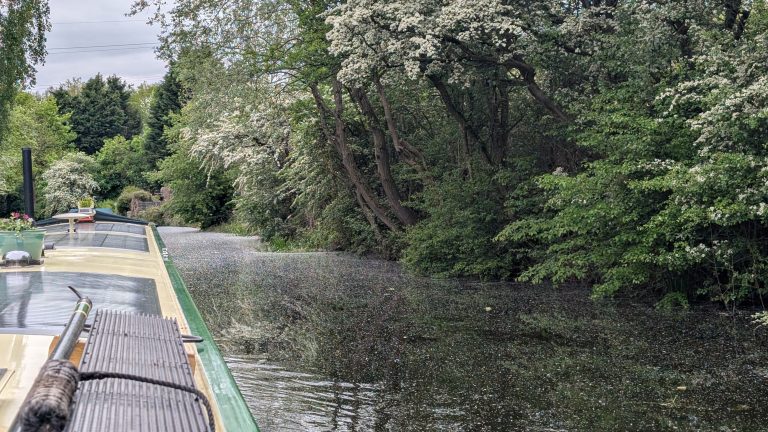
Before the hum of trains and the quiet passage of narrowboats, this stretch of the Aire Valley was home to one of the most important monastic sites in the north of England – Kirkstall Abbey.
Founded in 1152 by Cistercian monks, the abbey was built as a place of simplicity, devotion, and self-sufficiency. The Cistercians favoured remote locations, and at the time, this riverside setting would have felt far removed from the bustle of medieval life. Here, the monks had a disciplined routine of prayer, manual labour and quiet reflection. Their days where shaped by the rhythm of the seasons and flow of the river.
Over the centuries, the abbey grew into a thriving community, supported by farming, wool production and careful management of the surrounding land. Its architecture (still striking today) reflects the Cistercian commitment to austerity, yet there is an undeniable elegance in its soaring arches and long, symmetrical lines.
That life ended abruptly in 1539 during the Dissolution of the Monasteries, when Henry VIII ordered religious houses across England to close. Like so many others, Kirkstall Abbey was surrendered, its community dispersed and its buildings were left to gradually decay.
And yet, what remains is extraordinary.
Today, the abbey stands as one of the best preserved medieval monastic ruins in the country – a place where history feels close enough to touch. As we sit moored just across the water, watching the light shift across its weathered stone, it’s easy to imagine the lives that were once lived here.