Date:
From:
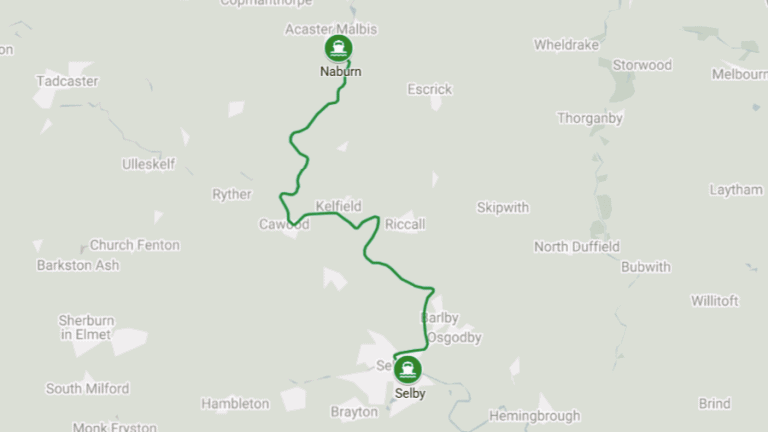
Selby
To:
Naburn
Waterway:
River Ouse
Travel Time:
3 hours
Distance:
14.75 miles
Contents:
Our First Adventure on the River Ouse
There are some waterways that become almost mythical among boaters. You hear stories about them long before you ever see them for yourself. The tidal River Ouse is one of those waterways.
Today was the day we would leave the safety of Selby and venture onto the tidal river for the very first time.
Although we have cruised on rivers before, this felt entirely different. Tales shared by fellow boaters had painted a picture of fast moving water, challenging bends, floating debris and little room for error. It was enough to make even experienced boaters feel a little apprehensive.
If we’re honest, we were nervous.
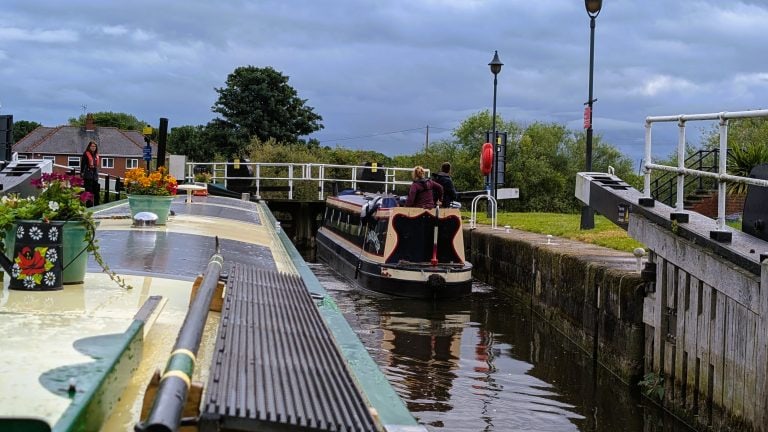
Cruising the Tidal River Ouse | Selby Lock to Naburn Lock
Preparing for the Tide
Unlike a typical day’s cruising on the canals, a tidal passage requires planning.
John had booked our passage through Selby Lock forty eight hours in advance and had also contacted the lock keeper at Naburn the day before our journey. The lock keepers at each end work together to ensure boats travel at the correct stage of the tide and, importantly, to keep track of everyone making the passage. If a boat doesn’t arrive when expected, they know to raise the alarm.
Preparation on board was equally important.
The anchor was positioned on the bow where it could be deployed quickly in an emergency. The rope and chain were checked and secured. The generator was tested, and the batteries were fully charged. Every precaution was taken before we set off.
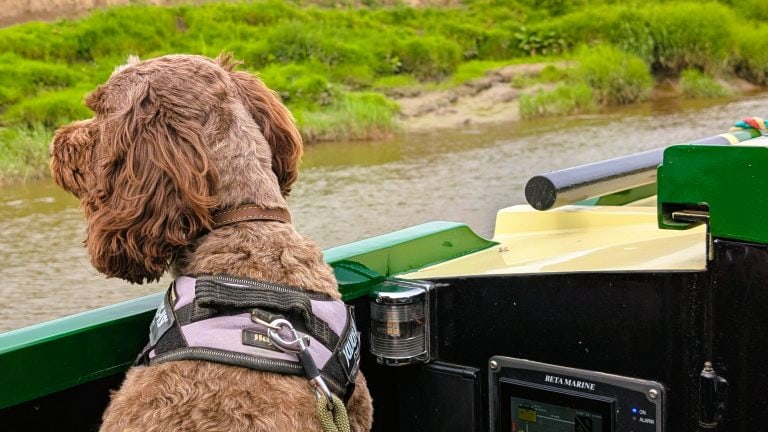
Our departure time was scheduled for 8 am, so the alarm went off at 6 am. There was just enough time for breakfast, final checks and, most importantly, a walk for Boasley before we donned our life jackets and made our way into Selby Lock.
Leaving the Safety of the Lock
At precisely 8 am the lock keeper opened the gates, and we entered the chamber alongside another boat.
As the water level slowly dropped, there was little to do but wait.
We knew what awaited us beyond the gates: a fast flowing tidal river.
The moment finally arrived.
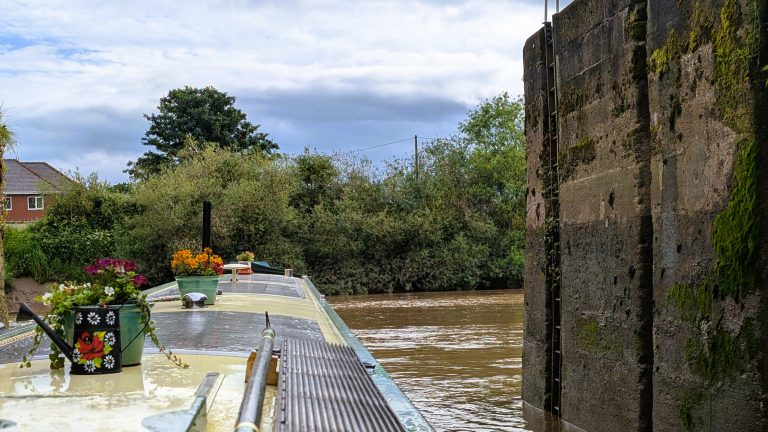
The gates opened, revealing the broad sweep of the River Ouse ahead. John increased the revs on the engine and guided us out of the lock. For a brief moment the current seemed to grab hold of the boat, pulling us into its world, but John quickly brought us under control and positioned us safely in the centre of the channel.
We were committed now.
There was no turning back.
A Heart Stopping Start
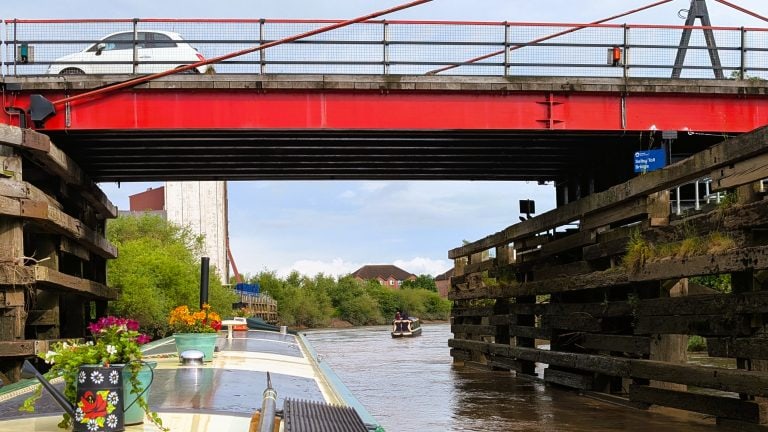
Before leaving, the lock keeper had given us simple instructions: take the right hand arch through the two bridges ahead.
Simple enough in theory.
In practice, the fast moving water had other ideas.
As we approached the bridge, the current pushed the boat alarmingly close to one of the bridge supports. It was one of those moments that feels much longer than it really is. Thankfully, John reacted quickly and skilfully, steering us safely through.
It was a nerve-racking introduction to tidal boating, and our hearts were racing long after the bridges disappeared behind us.
Learning the River's Secrets
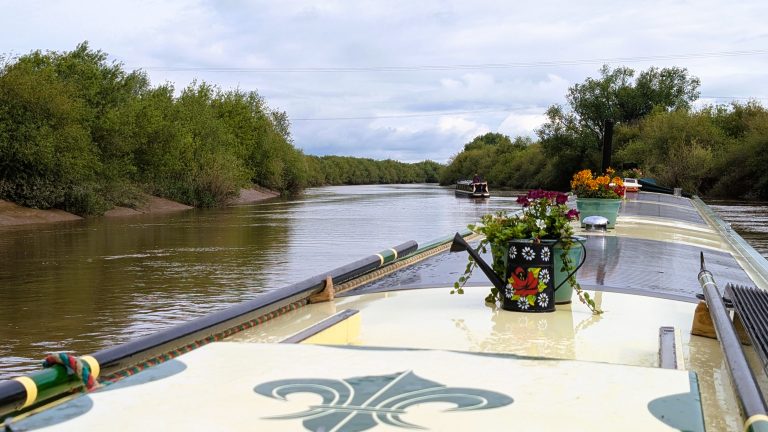
The River Ouse is a winding river, and navigating it requires understanding how the water behaves.
On the straight sections, we stayed in the middle of the channel. Around the bends, however, we needed to stay wide and follow the outside of the curve rather than cutting across corners.
The reason is simple: the inside edges can be surprisingly shallow. Running aground on a tidal river is far more serious than becoming stuck on a canal. With water levels rising and falling dramatically, it is not a situation any boater wants to experience.
Despite our careful planning, the river still taught us a few lessons.
On the first couple of bends, the current pulled us far closer to the bank than intended. This resulted in some colourful language, frantic ducking on the stern deck to avoid overhanging branches and the unfortunate loss of one of our fenders.
Fortunately, experience is a great teacher.
By the time we reached the next series of bends, we had developed a much better feel for how the boat and river interacted, and the remainder of the journey became significantly easier.
The Stowaway Under the Bow
As if navigating a tidal river wasn’t enough of a challenge, we soon discovered we had picked up an unexpected passenger.
Somewhere during our exit from Selby Lock, a large tree branch had become wedged beneath the bow of the boat.
For the next couple of hours, we dragged it along with us.
John tried repeatedly to dislodge it, but it stubbornly refused to move. It certainly can’t have helped our steering. Eventually, however, the river decided to solve the problem for us. The branch finally worked loose, disappeared beneath the boat and re-emerged behind us before floating away downstream.
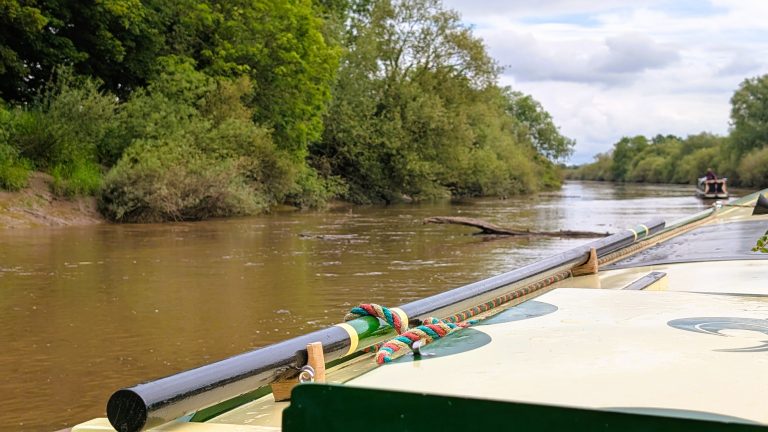
It was just one example of the large amount of debris carried by the river. Throughout the journey we encountered floating branches, logs and other obstacles that required constant vigilance.
Faster Than We Have Ever Travelled
One of the most striking aspects of the journey was our speed.
When we emerged from Selby Lock, the outgoing tide was helping us along at around seven miles per hour.
To most people, seven miles per hour sounds painfully slow.
To boaters accustomed to travelling at two or three miles per hour on canals, it feels astonishingly fast.
The landscape slipped by more quickly than we were used to, and the sensation of speed added to the excitement and nervousness of the morning.
As the tide changed, the river gradually calmed. By the time we approached Naburn, our speed had reduced to around five miles per hour. The river felt less intimidating, and our confidence had grown considerably.
Grey Skies and Good Fortune
The weather forecast had promised rain and thunderstorms.
Fortunately, the weather gods were feeling kind.
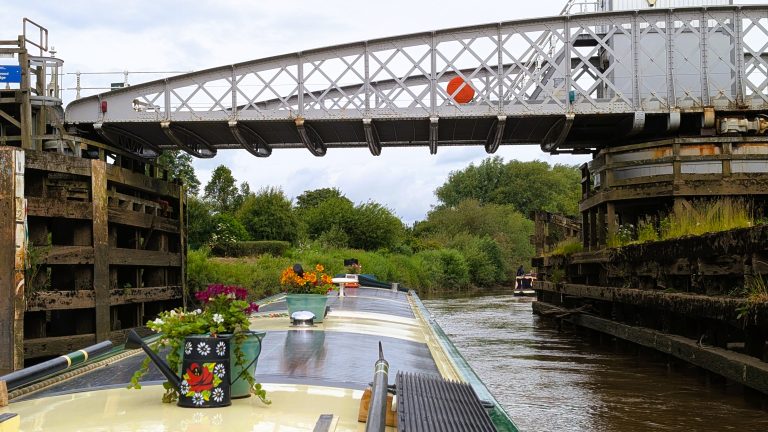
Most of the journey passed beneath heavy clouds punctuated by occasional bursts of sunshine. Although rain arrived towards the end of the passage, it was nothing more than a minor inconvenience. Dressed appropriately, we barely noticed it.
Given everything else we had to concentrate on, we were grateful not to be battling thunderstorms as well.
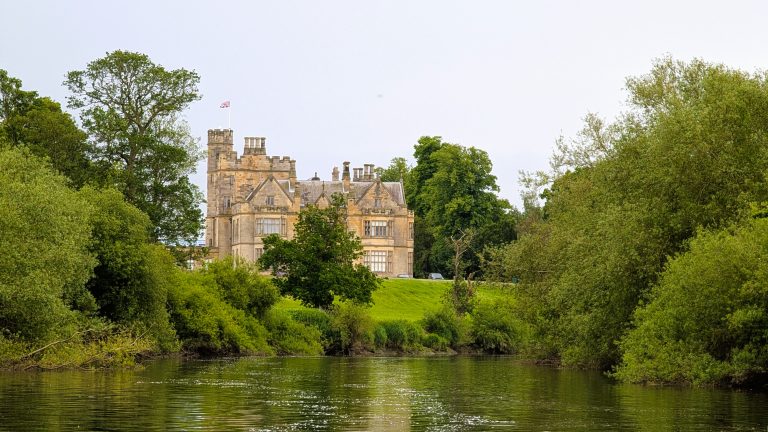
The Weir at Naburn
Long before we spotted the entrance to Naburn Lock, we saw the weir.
It is an imposing sight and one that instantly captures your attention.
As we approached, John carefully positioned the boat before making the turn into the lock entrance. The challenge was to steer accurately while ensuring the river’s flow didn’t sweep us past.
With a little guidance from the lock keeper and some excellent boat handling from John, we entered safely and secured the boat inside.
Compared with the excitement of the river outside, the lock itself felt remarkably calm. The water rose steadily, and keeping the boat under control was relatively straightforward.
Soon the upper gates opened, and our tidal adventure was officially over.
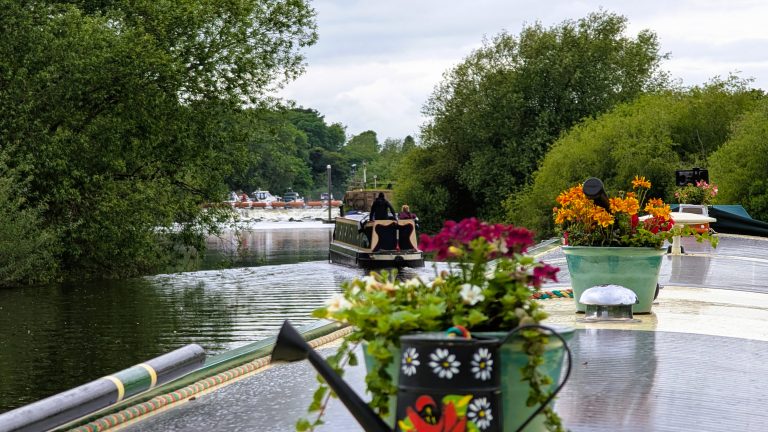
Safe Arrival
Once outside the lock, we thanked the lock keeper for his help. There was something reassuring about knowing that somebody had been expecting us and was there to ensure we arrived safely.
Just beyond the short stay moorings, we found the visitor moorings.
They were exactly what we needed.
A solid concrete walkway. Plenty of rings for mooring. A large grassy area where Boasley could stretch his legs.
Most importantly, it was peaceful.
After three hours of concentration and tension, we could finally relax.
Talking to the other boats that we had shared the locks with; stories were exchanged and experiences compared. Interestingly, we all seemed to agree on one thing: the first hour had been challenging, and none of us had particularly enjoyed the journey itself.
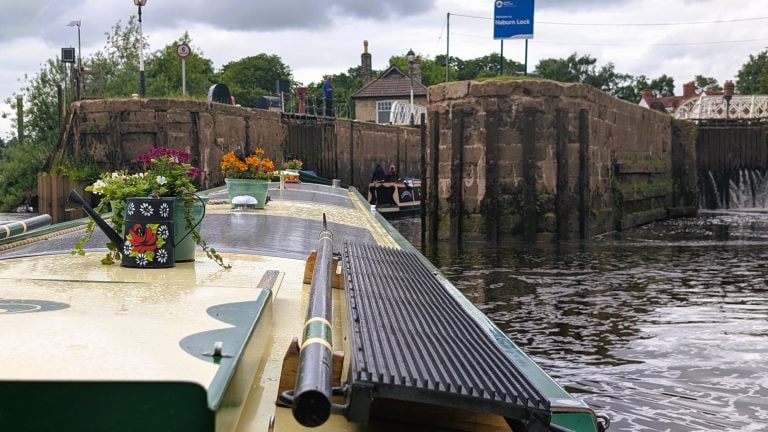
Building Confidence
Looking back, today’s passage wasn’t our favourite cruise.
There was little scenery to distract us, the constant concentration was exhausting, and the underlying anxiety didn’t completely disappear until we were moored in Naburn.
Yet despite all of that, the journey achieved something important.
It gave us confidence.
We had ventured onto a tidal river for the first time, navigated it safely and arrived exactly where we intended to be.
Perhaps most remarkably of all, we completed the entire three hour passage using nothing more than our electric motor powered by the batteries. The generator wasn’t needed once.
For a journey that had seemed so daunting beforehand, that feels like quite an achievement.
The tidal section of the River Ouse may not have been the most enjoyable waterway we’ve travelled, but it taught us an invaluable lesson: sometimes confidence isn’t built by loving the journey, but simply by proving to yourself that you can do it.