
Shared Locks, Sunshine and a Fresh Start
Date:
From:
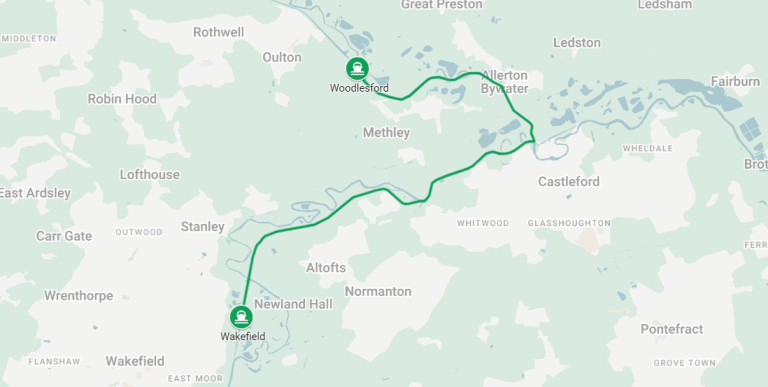
Wakefield
To:
Woodlesford
Waterway:
Air & Calder Navigation + River Calder
Travel Time:
4 hours
Distance:
9.5 miles
Contents:
From Wakefield to Woodlesford
After thirteen enjoyable days moored near Wakefield, today felt like the right time to move on. We’d explored the area around the canal, discovered its history, enjoyed the local walks, and tomorrow would have marked the end of our permitted stay anyway. With a promising weather forecast suggesting warm temperatures tempered by cloud cover, we cast off at 9am, looking forward to a gentle summer cruise.
As it turned out, the forecast got the cloud right… occasionally. What it failed to mention was the relentless wind that accompanied us for much of the day.
A Successful Turn
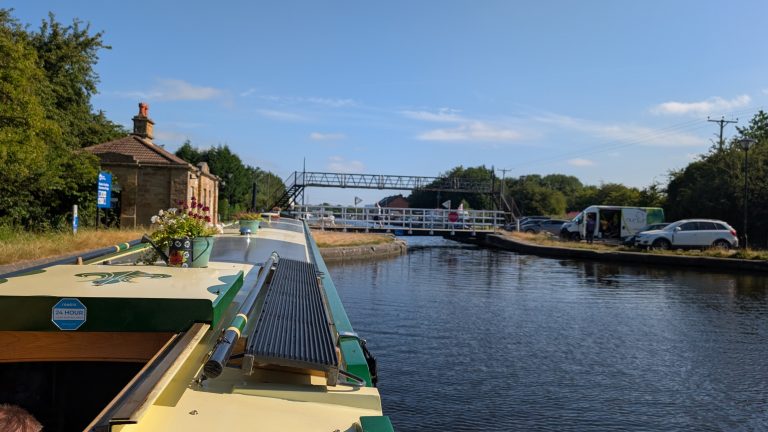
Before we could begin our journey, we had one small challenge to overcome – turning our 62-foot narrowboat around.
Although the water at Wakefield is unusually wide, John wasn’t entirely convinced there would be enough room. Slowly and carefully, he eased the bow around.
Thankfully, Round Tuit completed the manoeuvre successfully.
Another boater, watching the performance, smiled and commented that we’d had “a couple of feet to spare.”
Not exactly acres of room… but enough!
Every Boater's Perfect Morning
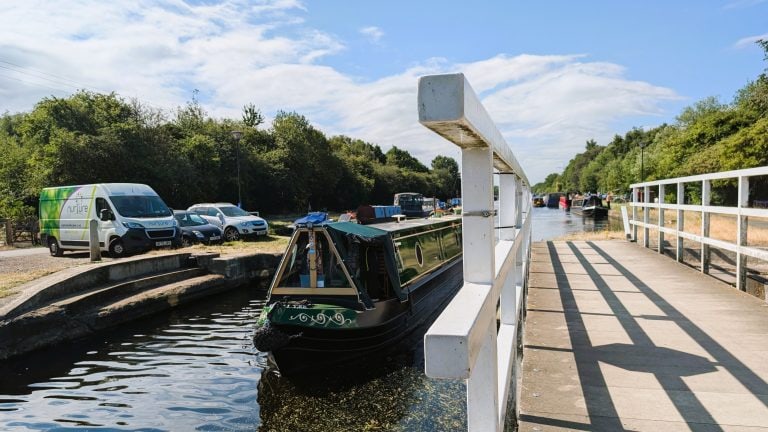
Our first destination was the water point. After nearly two weeks in one place, topping up the tank had become something of a priority.
John had deliberately planned an early start in the hope of beating the queue, and for once luck was firmly on our side. We arrived to find nobody waiting.
Unfortunately, the water pressure had other ideas.
The flow was painfully slow, and what is usually a fairly quick stop stretched into around forty-five minutes.
Still, there are always jobs to be done.
While the tank slowly filled, John emptied the waste tank and disposed of our rubbish.
For anyone living afloat, few things feel quite as satisfying as setting off with:
- a full water tank
- an empty waste tank
- empty bins
- and nowhere in particular to be
It’s one of those simple boating pleasures that somehow makes the whole day feel organised before you’ve even begun cruising.
Travelling with New Friends
While we were waiting, another boat pulled up behind us – Narrowboat Done Working.
John had got to know the couple during our stay in Wakefield, and it was lovely to catch up again while the water trickled into our tank.
We warned them that they’d probably be waiting a while before they could fill up and we chatted about our plans for the day.
As it happened, we were heading for exactly the same destination.
With several temporary lock closures currently affecting this stretch of navigation, careful planning has become essential. Missing the available opening times could easily mean an unexpected overnight stop.
The couple have been continuous cruising since last August, so naturally the conversation soon turned to boating life, routes and the little lessons you only learn through experience.
They suggested travelling together and sharing the locks.
It was an easy decision.
Sharing locks makes perfect sense wherever possible. It saves a considerable amount of water, halves the physical work involved, and reduces wear on the lock mechanisms. It also makes for much better company.
Working Together
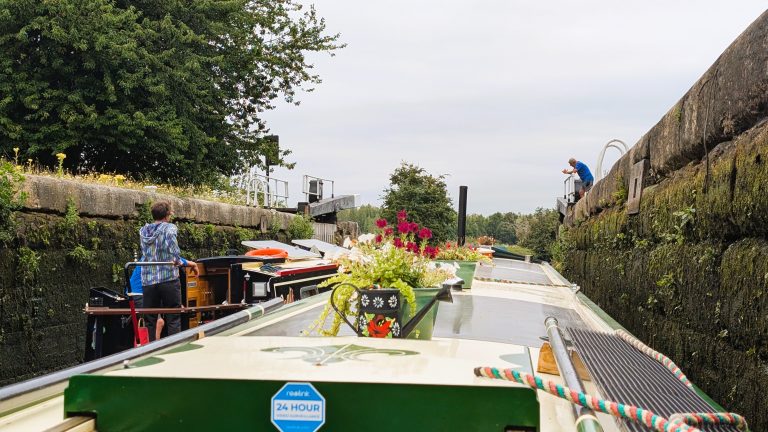
Our first lock of the day was Birkwood Lock.
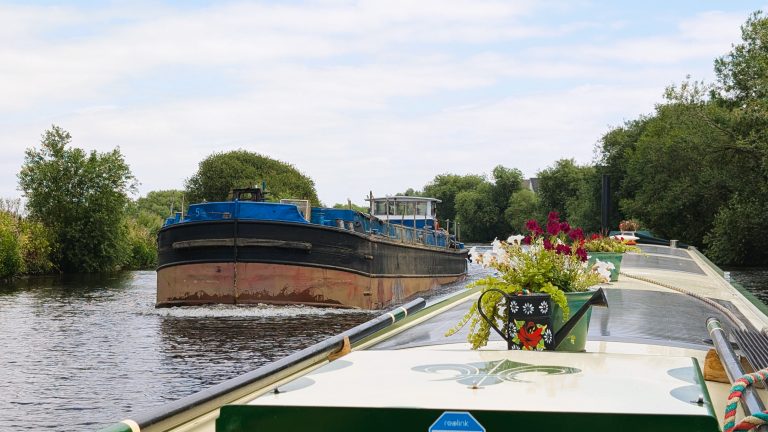
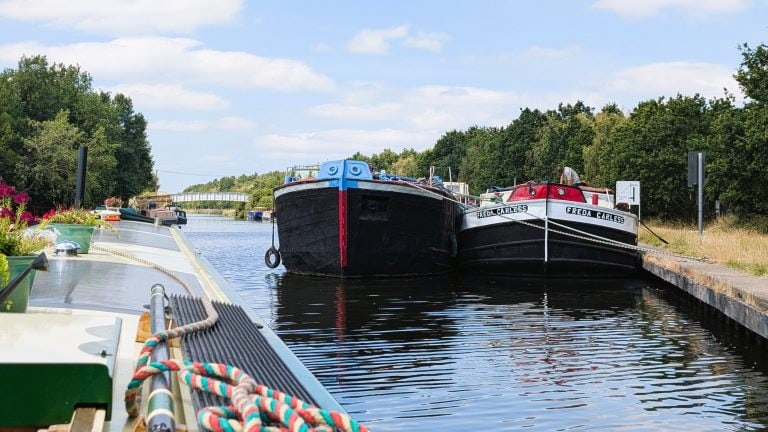
As we approached, a huge commercial-style vessel was just leaving the chamber. We pulled onto the lock landing and waited for ‘Done Working’ to catch us up.
The lock keeper was there assisting the larger vessel, so I wandered over to explain that we were waiting for another boat.
“No problem,” he smiled. “That gives me time to make a cup of tea.”
Once both boats had arrived, he opened the gates.
These locks on the Aire & Calder Navigation were built for the enormous working boats that once carried coal and cargo across Yorkshire, so fitting two narrowboats inside felt wonderfully spacious.
After leaving Birkwood Lock, our new cruising companions kindly offered to go ahead and prepare Kings Road Lock.
I certainly wasn’t going to argue with that arrangement.
Instead of climbing ashore and opening the gates, I was able to remain aboard while John simply steered us straight through.
Sometimes boating really does feel wonderfully efficient.
Taking My Turn
At Woodnook Lock, it was only fair that I returned the favour.
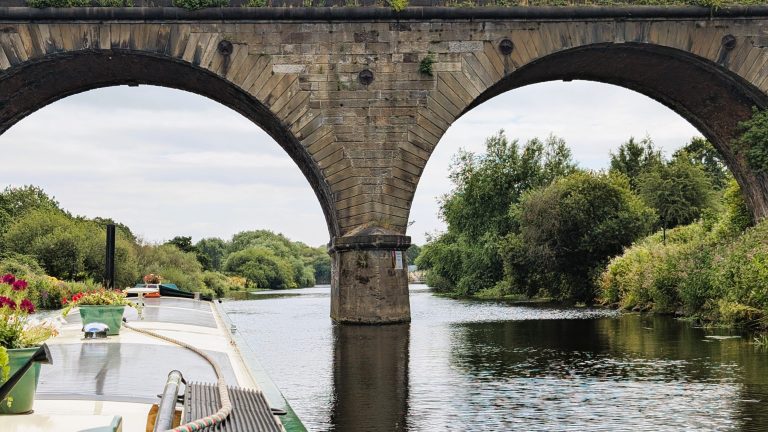
We left Kings Road Lock first and cruised beneath the M62 before arriving at Woodnook.
This time I hopped ashore, set the lock and prepared everything ready for both boats.
John brought Round Tuit gently into the chamber before ‘Done Working’ followed us in.
Working locks together like this has a lovely rhythm to it. Everyone naturally finds a role, jobs get shared without much discussion, and before long you’ve settled into an easy routine.
A Powerful Reminder at Lemonroyd Lock
Leaving Woodnook, we made a sharp left turn onto the River Calder towards Woodlesford.
Our final challenge was Lemonroyd Lock.
As luck would have it, the same lock keeper we had met earlier in the day was waiting there. He wasn’t specifically expecting us – another large commercial vessel was due shortly – but he happily saw us safely through first.
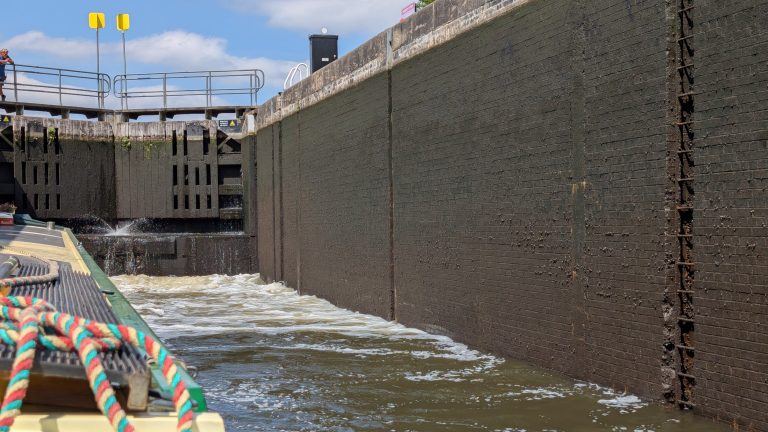
As we approached, enormous torrents of water thundered from the sluices while the chamber emptied.
It was an impressive reminder that this is a deep lock.
Before the lock began filling, the lock keeper reminded John to secure the stern rope around the lock risers rather than simply using the motor to control the boat.
His advice quickly proved invaluable.
As the sluices opened, the volume of water entering the front of the lock created tremendous turbulence. Round Tuit surged and strained against her ropes, and it became immediately obvious why these locks deserve respect.
Had the boat been pulled forwards into that powerful flow of water, the consequences could have been very serious indeed.
Sometimes it’s the simplest reminders that matter most, and we were genuinely grateful for his experience.
A Peaceful Afternoon at Woodlesford
Just beyond the lock we found a pleasant mooring on the right-hand side.
Two very large boats were already tied up there, but their crews assured us they weren’t planning to move, so we settled in comfortably behind them.
Our friends aboard ‘Done Working’ continued a little further before finding their own quiet spot.
It had been surprisingly enjoyable travelling together.
Boating can sometimes feel wonderfully peaceful but sharing the day with people who understand the lifestyle, swapping stories between locks and laughing together as the miles pass, adds another dimension entirely.
Our new mooring couldn’t be much better.
Long grass stretches alongside the towpath, Boasley has ample space to explore, and there’s a nature reserve just a short walk away.
Despite the persistent wind, today’s cruise had been thoroughly enjoyable.
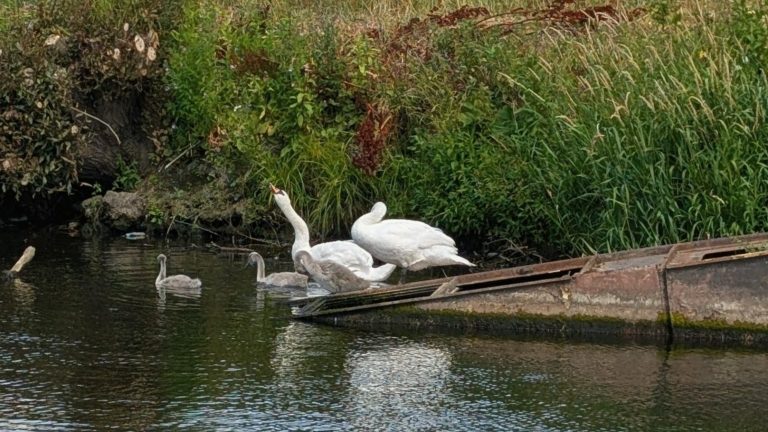
The sunshine stayed warm without becoming unbearable, occasional clouds drifted overhead, bees busily explored the flowers growing on our roof and water birds accompanied us along the navigation.
Large butterflies danced across our path throughout the afternoon. Although one inevitably found its way inside the boat once we’d moored.
That, of course, left John performing his now well-practised role of butterfly escort, gently persuading the unexpected visitor back out into the sunshine.
A Glimpse into Medieval Woodlesford
Although today’s Woodlesford is best known for its waterways and proximity to Leeds, the surrounding landscape has roots stretching back many centuries. During the medieval period, this area formed part of the ancient parish of Rothwell, where farming communities worked the fertile floodplains of the River Calder. The river itself was an important natural highway long before it was engineered for navigation, providing water, fish and transport for nearby settlements.
The name Woodlesford is thought to have evolved from Old English, combining references to woodland and a river crossing – or ford. Before bridges became common, such fords were vital crossing points for travellers, merchants and pilgrims moving between villages. The nearby monks of Kirkstall Abbey, founded in 1152, owned extensive lands throughout the Aire and Calder valleys and would almost certainly have been familiar with this area as they managed farms, mills and grazing land that helped support the abbey.
Standing quietly beside the navigation today, with woodland on one side and the river nearby, it’s easy to imagine that long before canals, locks and narrowboats appeared, medieval farmers, monks and traders were following many of the same natural routes through this peaceful Yorkshire landscape.







Lovely account of your recent travelling
Thanks Jenny