
A Journey Through Ancient Yorkshire

Date:
From:
Castleford
To:
Wakefield
Waterway:
River Calder + Aire & Calder Navigation
Travel Time:
2 1/2 hours
Distance:
6.3 miles
Contents:
From Castleford to Wakefield
Some cruising days are all about covering the miles. Others are about discovering somewhere completely new. Today’s journey was definitely the latter.
We left the familiar waters of the River Aire behind and turned onto the River Calder, opening up another stretch of Yorkshire’s remarkable inland waterways. Although the sun never really managed to break through the cloud, the warm breeze, winding river and abundance of wildlife made for one of those quietly memorable cruising days.
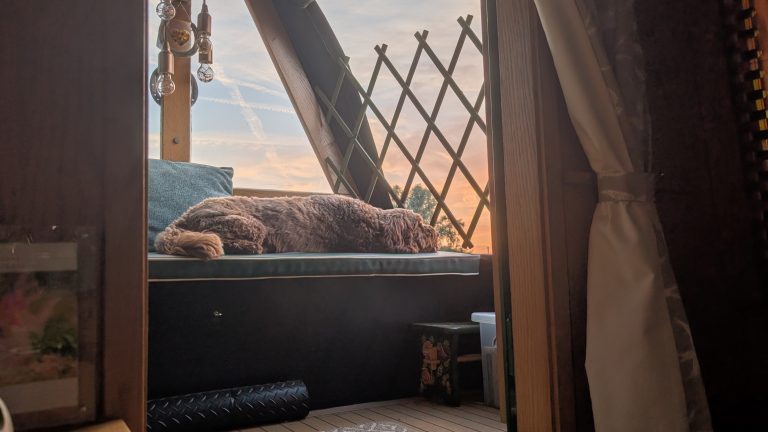
A New River Beckons
Before setting off, John moved the boat a short distance to fill our water tank just outside Castleford Lock.
Castleford Flood Lock stood open, allowing us to cruise straight through without stopping. Keeping well clear of the weir to our left, we crossed directly onto the River Calder – completely new water for us.
There’s always something exciting about turning onto an unfamiliar waterway. Every bend holds something different, and suddenly you’re looking at maps with fresh curiosity rather than familiarity.
The River Calder immediately felt different. It wound gently through open countryside, the navigation following the natural curves of the river rather than the broad, straight cuts of some commercial waterways.
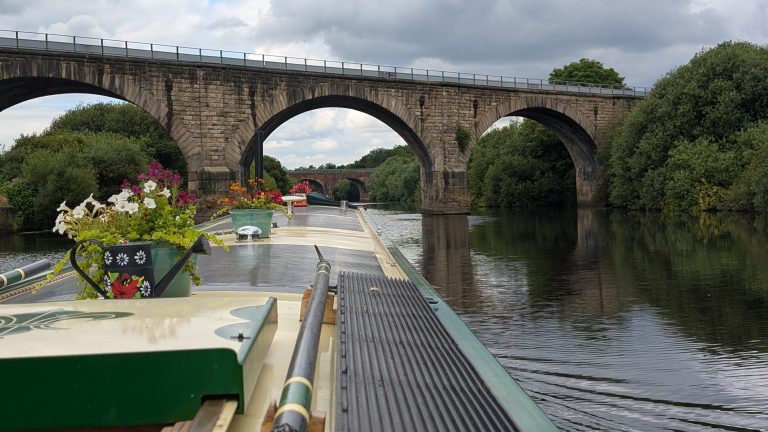
Following the River
The day remained pleasantly warm despite the heavy cloud, with a brisk wind making itself known every now and then.
As we approached Fairies Hill Lock, it would have been easy to assume we needed to enter it, but this is one of those places where we stay on the river itself, passing to the right while the lock serves another route.
It wasn’t long before Woodnook Lock appeared on our left.
John eased the boat onto the lock landing while I climbed up to the impressively deep electric lock, CRT key already in hand. After setting everything ready, I waved to signal that the lock was prepared.
John pulled away from the bank, steered out into mid-river and then made a sharp left turn into the lock chamber.
Watching a boat enter from the river into one of these deep locks is always satisfying. Everything happens rather more slowly than on the narrower canals, giving you time to appreciate just how substantial these structures are.

A Helpful Warning
While the boat was rising, a member of the Canal & River Trust team arrived and stopped for a chat.
He asked whether I’d experienced any problems operating the lock, explaining that there had been a few issues recently.
Thankfully, apart from the scarily creaky gates and rather vocal sluices, everything had behaved perfectly.
He also passed on some useful information.
Several commercial tankers were expected to be travelling along the navigation that day – one possibly behind us and another two coming towards us. He was there to assist them through the locks.
It was reassuring to know in advance. Although these commercial vessels are far less common than they once were, they still have priority on parts of the Aire & Calder Navigation, and having a little extra warning allowed John to keep an even closer eye ahead.
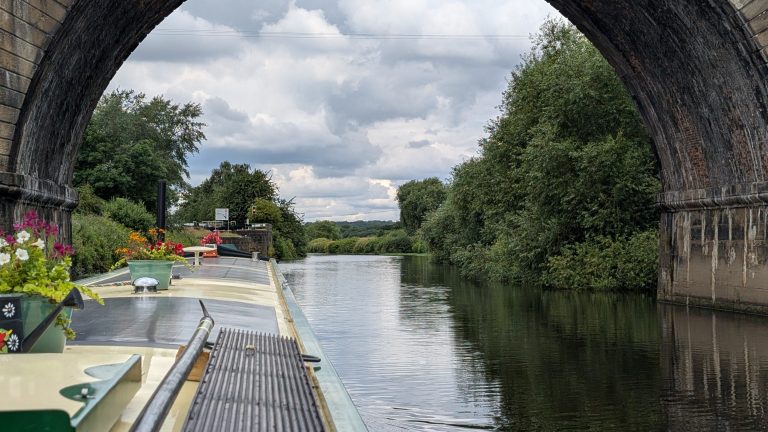
Sharing the Waterway
Once through Woodnook Lock, we rejoined the Aire & Calder Navigation.
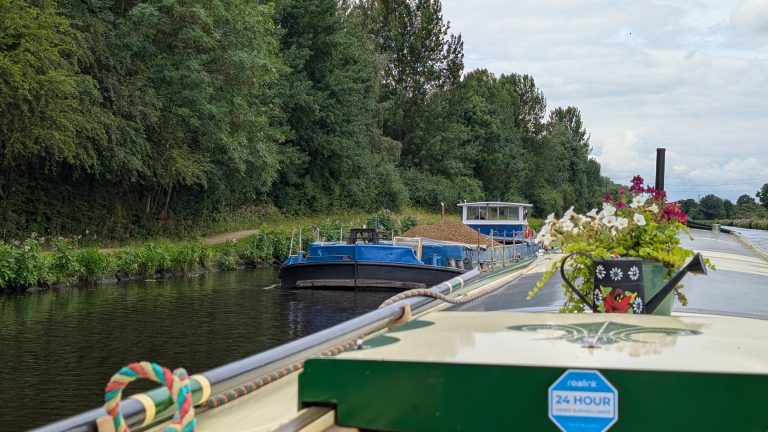
In the end, we encountered just one tanker.
It wasn’t especially long, but it was considerably wider than a narrowboat and sat remarkably low in the water beneath its cargo. From what we could see, it appeared to be carrying a mixture of sand and stone, a reminder that these waterways continue to serve industry as well as leisure.
Meanwhile, nature seemed entirely unconcerned by the passing traffic.
Despite the lack of sunshine, swallows skimmed effortlessly across the water while butterflies fluttered along the banks and dazzling damselflies danced above the reeds.
Even passing beneath the roar of the M62 couldn’t spoil the peaceful atmosphere for long.
Boaters with a Familiar Story
At Kings Road Lock we met another narrowboat travelling in the opposite direction.
As often happens, lock working became a team effort.
I opened the bottom gates while the lady from the other boat worked the top gates. Once our boat had risen, I could simply step aboard without John needing to pull into the lock landing and me walking down to join him – a small luxury that is always appreciated.
While the lock filled, conversation naturally turned to boating.
It soon became apparent that their story closely mirrored our own.
Like us, they had reached their fifties, decided that working life had run its course, sold almost everything and moved aboard a narrowboat.
Even more amusing was hearing that their family’s reaction had been almost identical to ours.
“You’re doing what?”
It seems that giving up conventional life to live on the waterways still surprises plenty of people!
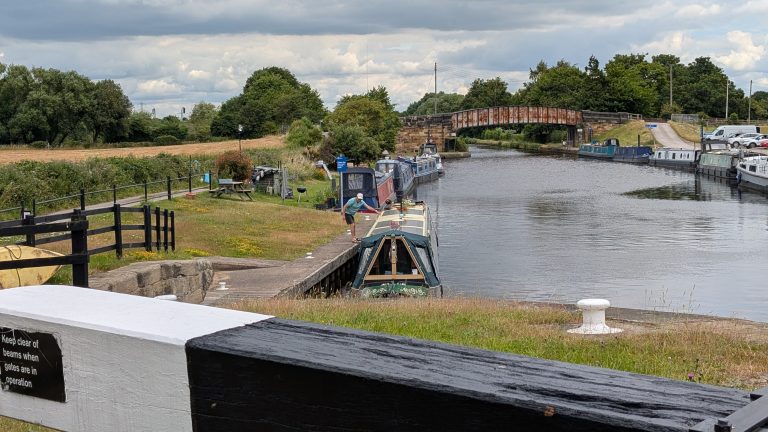
The Rare Treat of Riding Through a Lock
By the time we reached Birkwood Lock, another Canal & River Trust lock keeper was already waiting.
Presumably he too was expecting one of the commercial vessels, but when he realised we wanted to pass through, he very kindly offered to work the lock for us.
That meant I was able to stay aboard and ride through the lock instead of hopping on and off with my key.
It felt like quite a novelty.
Normally I’m the one operating the paddles while John brings the boat through, so simply standing on deck and enjoying the ride made for a pleasant change.

Stanley Ferry and a Welcome Stop at Wakefield
Soon afterwards we reached Stanley Ferry.
As we cruised past the Canal & River Trust workshops, we could see where all of the new lock gates for the country’s waterways are built – an impressive reminder of the craftsmanship required to keep Britain’s canals operating.
I expected to have to get off and operate the swing bridge, but luck was on our side again.
Another boater had only just passed through and kindly offered to close it behind us, allowing us simply to cruise straight on without leaving the boat.
After pumping out our waste tank nearby, we moved only a short distance before finding a peaceful mooring.
It’s an attractive spot, and with one of our daughters visiting next week, it seems an ideal place to stay for a while. It’s easily accessible by car while still feeling wonderfully tucked away beside the water.
Sometimes there really is no need to rush onwards.

The Ancient History of the Calder Valley
Although today the River Calder is known for its navigation and industrial heritage, people have lived beside these waters for thousands of years.
Long before canals, locks and commercial barges transformed the landscape, the Calder Valley was home to prehistoric communities who were drawn here by fertile land, fresh water and abundant wildlife. Archaeological discoveries across West Yorkshire have revealed evidence of Bronze Age and Iron Age settlements, with ancient trackways following many of the same natural routes that roads and waterways use today.
By the time the Romans arrived during the first century AD, the nearby settlement at Castleford (known as Lagentium) had become an important military outpost guarding the crossing of the River Aire. Roman roads linked the area with York, Doncaster and beyond, helping to establish Yorkshire as a vital transport corridor nearly two thousand years before the canals were built.
During the medieval period, the rivers continued to shape local life, powering mills, supporting fishing communities and providing routes for trade. However, it wasn’t until the eighteenth century that engineers transformed both the River Aire and River Calder into one of Britain’s most important commercial navigations. Coal from the Yorkshire coalfields, building stone, grain and countless other goods travelled these waters, fuelling the Industrial Revolution.
Today, much of that heavy industry has disappeared, yet cruising these navigations still offers glimpses of every chapter of their history. Modern pleasure boats now share waters once dominated by working barges, while ancient river valleys continue to guide travellers just as they have done for countless generations.
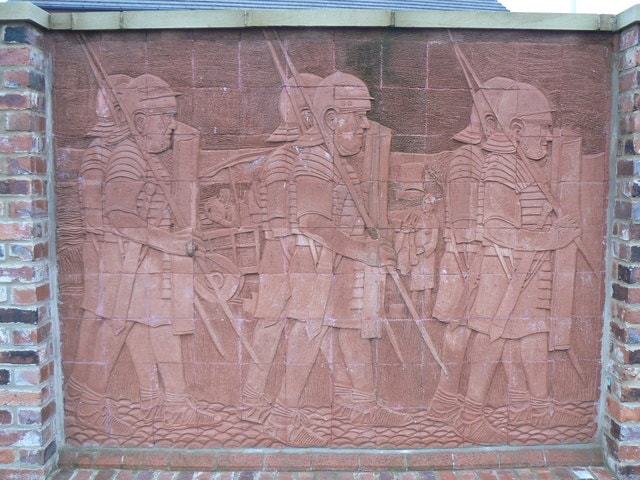
The Castleford Legions (Roman relief)
Photo: Bernard Bradley / Geograph, via Wikimedia Commons, CC BY-SA 2.0.