Leeds to Woodlesford_Map

Date:

10 May 2026

From:

Leeds

To:

Woodlesford

Waterway:

River Aire and Aire & Calder Navigation

Travel Time:

2 1/2 hours

Distance:

5.5 miles

Leaving Leeds behind

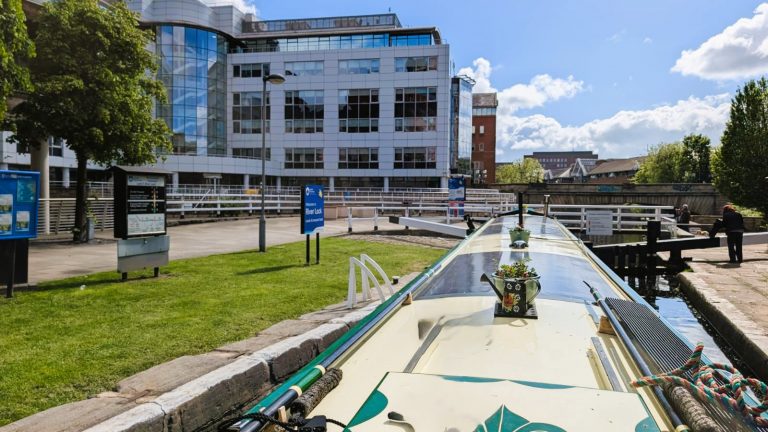
There is always something exciting about leaving a city behind by boat. This morning, at 10:30, we untied from our mooring in Leeds and eased slowly towards River Lock.

From our mooring we could already see the lock waiting ahead of us – a traditional manually operated lock, familiar and reassuring. But beyond it lay the River Aire, and rivers always feel like an entirely different world.

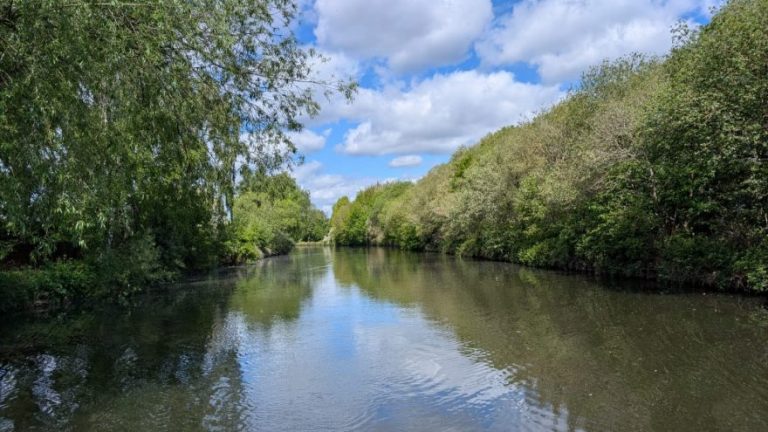
The moment the gates opened and Round Tuit moved out onto the river, the atmosphere changed completely. The water suddenly felt wider and more open, the banks softer and greener than the city landscape. Tall trees and thick shrubs lined much of the bank, replacing the close industrial edges of the canal network.

Leeds River Lock

The changing character of the river

Rivers demand a different kind of boating too. On canals, moorings are usually plentiful and predictable, but on rivers suitable stopping places can be surprisingly limited. If there is one piece of advice we would give to anyone cruising the Aire, it would be to plan ahead carefully and always have several possible mooring locations in mind before you set off.

It’s also important to remember that we are sharing this waterway with a greater variety of vessels, some smaller (such as rowing sculls) and others larger and faster than us. The key is to keep out wits about us at all times and stay to the right, being prepare for whatever we might encounter.

Today the river itself was kind to us. There was only a gentle flow on the water, enough to remind us we were no longer on a canal but never enough to cause concern. The weather drifted between sunshine and large slow-moving clouds, with bursts of warmth followed by cooler grey moments that softened the landscape.

As we cruised further from the city centre, old industrial buildings continued to line both banks – proud reminders of the waterways’ working past. Gradually, though, the scenery became greener and more peaceful. Trees screened much of the modern world from view, although occasional glimpses of factories and construction sites still appeared through the foliage.

River Aire

Automated locks

Our first automated lock of the day was Leeds Lock, followed by Knostrop Fall Lock. Compared with the traditional manual locks, these large river locks can feel daunting. There are quite a few buttons to press and procedures to follow to ensure boats pass through safely, but thankfully the process itself is very clear and surprisingly straightforward.

What struck us most was the sheer scale of the chamber. Once inside, our narrowboat suddenly felt tiny, floating quietly in an enormous concrete space as the water shifted beneath us.

The scale of these locks becomes even more impressive when you remember that the River Aire was once a major commercial waterway, built to carry large industrial barges transporting coal and goods across Yorkshire.

From this point onwards we were traveling along the Aire & Calder Navigation. This is a  canalised part of the river that was created to make it navigable for larger freight carrying boats.

Knostrop Fall Lock

Birds, bridges and the sound of traffic

Wildlife accompanied us for much of the journey. Alongside the usual canal birds – ducks, swans and geese – we also spotted cormorants perched along the riverbanks and black-headed gulls circling overhead. The wider waterways attract different types of birds, adding another layer to the changing character of the day.

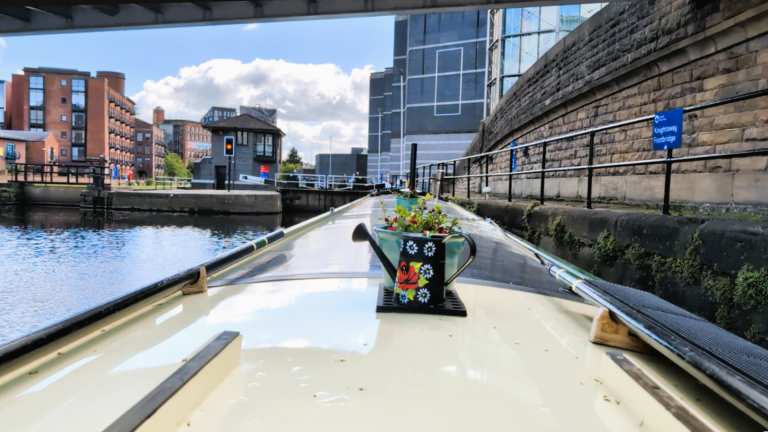
For a while the only sound was distant traffic, a low constant rumble somewhere beyond the trees. Gradually it grew louder until we passed beneath the huge span of the M1 motorway bridge, a striking contrast between peaceful river cruising and the relentless movement of modern life overhead.

Not long afterwards we reached Fishpond Lock, where we attracted quite a bit of attention from gongoozlers watching the boat pass through. We never mind that at all. One of the nicest parts of this lifestyle is chatting with curious passers-by, answering questions about life aboard, and letting people watch the locks in action. There is still something wonderfully fascinating about seeing a narrowboat rise and fall in the water.

Boat Going Under the M1

Finding the perfect mooring

As we reached Woodlesford Lock we stopped briefly to refill our water tank, then reversed back to the nearby visitor moorings. The location immediately appealed to us – secure, convenient and close to local shops – so we decided it was the perfect place to stay for a couple of days.

John eased Round Tuit backwards into a gap that was the perfect length for our boat.

Our Boat Moored at Woodlesford Lock

The River Aire and Aire & Calder Navigation

Woodlesford Lock in bloom

And finally, a special mention must go to whoever cares for Woodlesford Lock. It is one of the loveliest lock environments we have seen in quite some time. Bright flowers spill from planters around the lock edges, while a small wildlife area beside the water creates a peaceful little haven that invites you to simply sit, pause and watch the world drift by.

Today Woodlesford feels calm and welcoming, but the village itself has deep industrial roots, once closely tied to the mining communities that surrounded the River Aire.

After a day of river cruising, automated locks, industrial history and changing skies, it felt like the perfect place to stop.

Aire & Calder Navigation

Echoes of industry along the Aire

It is easy to forget, while drifting quietly between green riverbanks and birdsong, that the River Aire was once one of the great industrial arteries of Yorkshire. For centuries, coal, textiles and goods travelled these waters between Leeds and the Humber Estuary, powering the industries that shaped the region.

The immense scale of the locks suddenly makes perfect sense when viewed from this historical perspective. These waterways were never designed for leisure boats like ours, but for large commercial barges loaded with Yorkshire coal during the height of the industrial age.

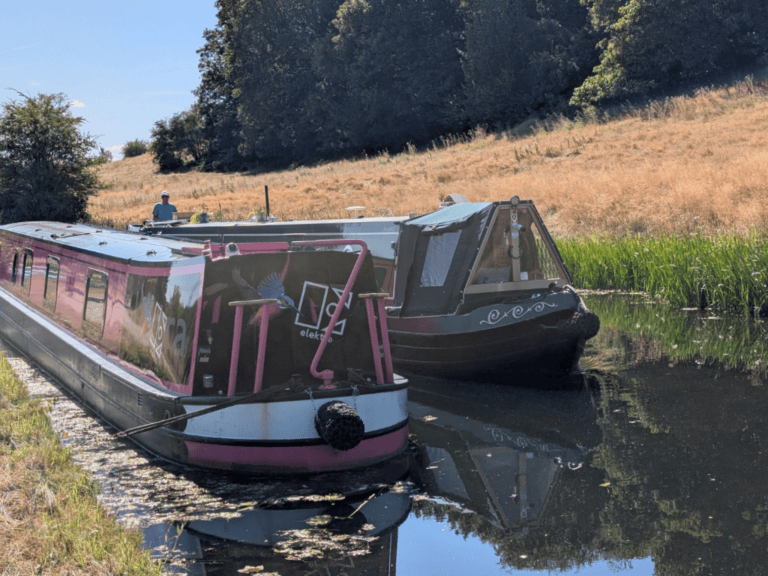
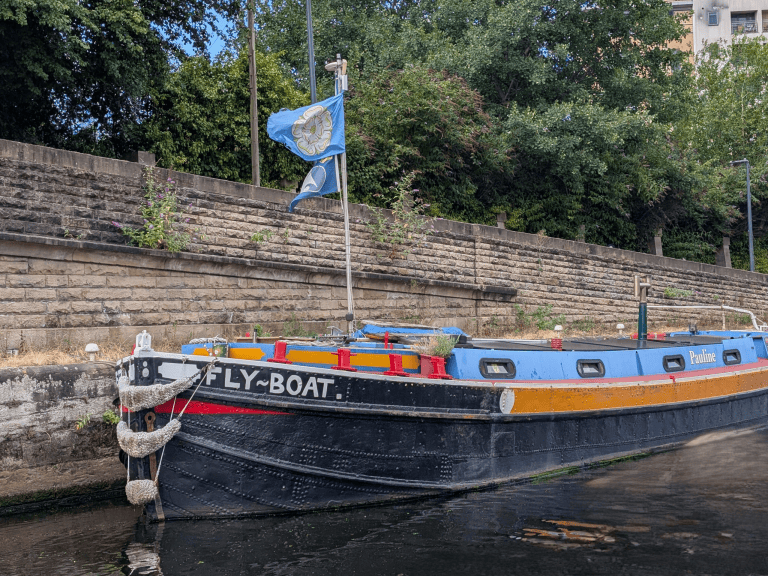
Although nature has softened much of the landscape now, traces of that past still linger everywhere. Old industrial buildings continue to appear between the trees and traditional working boats can be seen moored in the river banks.

Thwaite Mills stand near Knostrop – one of Britain’s last surviving water-powered mills – a reminder of how completely these waterways once dictated life and industry across Yorkshire.

Even peaceful Woodlesford owes much of its existence to that industrial heritage, growing up alongside the collieries and mining communities that once surrounded the River Aire.

Yet this is not simply a river trapped in history. Along this stretch, modern flood defences now stand beside centuries-old waterway navigations, showing how the Aire continues to evolve and shape the landscape around it. Past and present flow side by side here, carried together on the same water.

Thwaite Mills

Thwaite Mills from across the canal” by John Illingworth, via Wikimedia Commons, licensed under CC BY-SA 2.0

[wp_comments]
Subscribe
Be informed every time we upload a new blog post.

Canal Inspired Designs

Clothing │Stickers │Stationery │Home Décor │Accessories │Gifts